Mitigation coordination for apartments, multifamily, retail, offices, and warehouses in Modesto, CA. Structured large-loss response focused on downtime reduction and tenant stability.
Commercial and large loss mitigation involves water, fire, smoke, mold, storm, contents, and biohazard response for apartment complexes, multifamily buildings, retail centers, offices, warehouses, and other commercial properties where the scale of the loss, the number of occupants affected, or the operational impact requires a structured and coordinated response. RedTag Property Mitigation handles commercial and large loss mitigation throughout Modesto, CA and the surrounding Central Valley. The priorities in a commercial loss are different from a single residential property. Downtime must be minimized, tenants and occupants must be kept informed and safe, and documentation must be maintained throughout a project that may span multiple areas, units, or floors simultaneously. Call(209) 424-8233 for commercial mitigation in Modesto.
Let’s get your project quote started.
Water damage in apartment complexes frequently affects multiple units when a pipe fails or a supply line breaks on an upper floor. The affected unit, the units below it, and any common areas in the affected stack all require assessment and mitigation. Tenant access and communication need to be managed throughout the project. Temporary relocation may be required for heavily affected units while drying proceeds, which adds a coordination layer that single-family losses do not have.
Retail properties have trading hours, inventory, and customer access to consider alongside the mitigation work. A water loss in a retail center needs to be assessed quickly to determine which areas can continue trading and which require closure. Mitigation equipment placement and work scheduling may need to account for business hours and minimize disruption to adjacent tenants who are not directly affected by the loss.
Office buildings with water, fire, or smoke damage require mitigation that works around occupied floors and active workspaces where possible. Electrical and IT infrastructure in office environments adds complexity to water damage assessment and drying. Documentation and communication with building management, individual tenants, and their respective insurance carriers may run concurrently throughout the project.
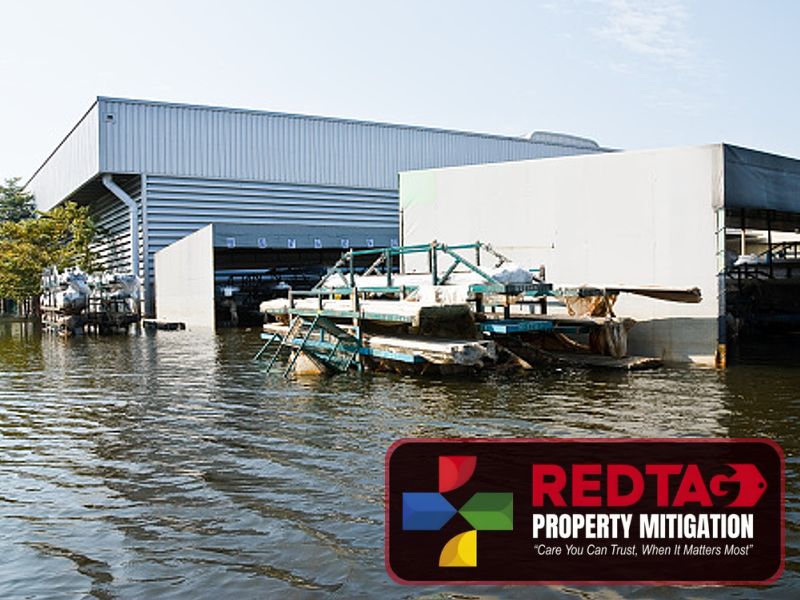
Warehouses and industrial facilities present large open floor plans with high volumes of contents including inventory, equipment, and racking systems.Water mitigation in a warehouse environment requires equipment deployment at scale across large areas. Contents considerations, including whether inventory can remain in place or must be relocated, are determined during the initial assessment and managed throughout the drying period.
Mixed-use buildings with residential units above commercial ground floors, and any building with shared common areas such as lobbies, corridors, laundry facilities, or parking structures, can sustain losses that affect multiple tenant types simultaneously. The mitigation scope in these situations requires coordination across both commercial and residential tenants and may involve multiple insurance carriers with separate claim files running in parallel.
Contact RedTag Property Mitigation at(209) 424-8233 to discuss commercial or large loss mitigation for a specific property type or situation in Modesto or the surrounding Central Valley.
Commercial and large loss mitigation in Modesto covers a range of property types where the scale, occupancy, or operational nature of the property requires a different approach than standard residential mitigation.
Large loss commercial mitigation requires the same technical process as residential mitigation but with additional coordination layers for occupant communication, simultaneous multi-area work, documentation across multiple claim files, and reporting to building ownership and management throughout the project.
A large loss assessment covers the full extent of the affected areas before mitigation work begins rather than expanding incrementally as damage is discovered. Understanding the complete scope at the start allows equipment deployment, crew scheduling, and documentation to be planned for the full project rather than adjusted reactively as additional affected areas are identified during work already in progress.
Large loss properties frequently requirewater extraction and drying in multiple units or areas at the same time. Equipment is deployed across all affected areas concurrently rather than sequentially. Daily moisture monitoring covers every affected area throughout the drying period. Drying logs record readings for each area separately so the documentation reflects actual conditions in every part of the affected scope.
Tenants and occupants in affected areas need to know what is happening, how long it will take, what access restrictions apply during the work, and when they can expect normal conditions to be restored. Communication protocols are established at the start of the project with the building owner or property manager and followed consistently throughout. Tenants are not left to find out about the progress of work through observation alone.
A large loss in a multitenant building may involve a building owner’s policy, individual tenant policies, and in some cases multiple carriers for different affected areas. Documentation is maintained in a way that allows records for each affected area or unit to be extracted separately if required by different carriers or adjusters. A single project file that cannot be separated by area creates difficulties in the adjustment process when multiple policies are involved.
Building owners and property managers need regular updates on the progress of mitigation work, the current drying status of affected areas, and the anticipated timeline to project completion.Property management support provides the centralized reporting and communication structure that building owners and managers need to stay informed and to manage their obligations to tenants throughout the project.
Contact RedTag Property Mitigation at(209) 424-8233 to discuss how large loss mitigation is handled for a specific commercial property situation in Modesto or the surrounding Central Valley.
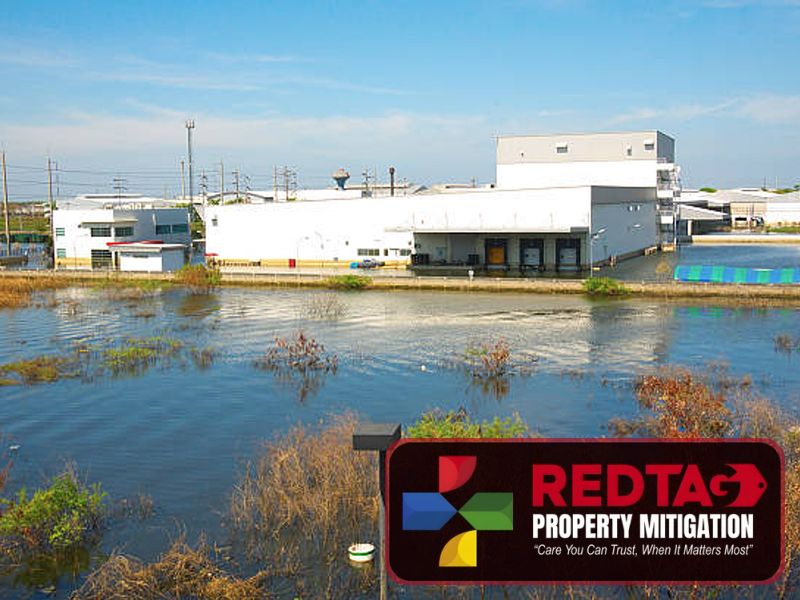
Commercial water mitigation and structural drying covers emergency extraction, structural drying with commercial-grade equipment, moisture mapping, flood cuts, antimicrobial treatment, and insurance documentation. In a large loss context these services are deployed across multiple affected areas simultaneously with daily monitoring and reporting for each zone.
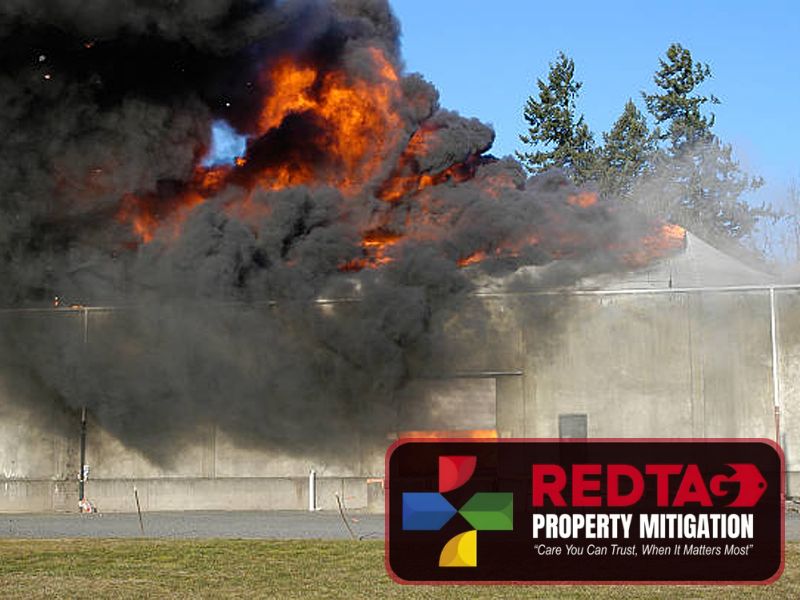
Fire, smoke, and soot mitigation for commercial properties involves board-up and weather protection, charred material removal, smoke and soot cleaning across large surface areas, odor control, structural stabilization, and pre-reconstruction preparation. Large fire losses in commercial buildings often involve occupied adjacent areas that require protection from soot and odor migration during the active cleaning phases.
Mold mitigation support in commercial properties addresses mold growth resulting from unresolved water intrusion or humidity conditions. Containment, negative air pressure systems, HEPA filtration, affected material removal, and post-remediation clearance preparation are applied following IICRC S520 protocols. Commercial properties with mold conditions often have documentation requirements from building management and insurance that exceed standard residential requirements.

Storm and emergency mitigation covers emergency roof tarping, board-up, temporary shoring, debris removal, and property loss prevention for commercial properties following storm events. Large commercial roofs and facades present a greater exposure during weather events than residential structures, and rapid protective response limits secondary damage to interior areas and contents.
Contents and asset protection for commercial properties covers pack-out of furniture, equipment, inventory, and business records, digital inventory and insurance documentation, and secure storage during the mitigation period. Commercial pack-out often involves specialized equipment and business records that require careful handling and specific documentation to support both the property damage and business interruption components of the claim.
Biohazard and trauma scene cleaning in commercial settings includes sewage backup response, unattended death or trauma scene remediation, and communicable disease decontamination. Commercial properties with these events have additional documentation requirements from building management, regulatory authorities, and insurance carriers beyond what applies to residential situations.
Commercial and large loss properties in Modesto require the same mitigation services as residential properties but applied at greater scale, across more complex structures, and with documentation requirements that reflect the commercial context.
Contact RedTag Property Mitigation at(209) 424-8233 to discuss which services apply to a specific commercial or large loss situation in Modesto.
The operational impact of a commercial property loss extends beyond the physical damage to the structure and contents. Every day a commercial property is partially or fully out of operation has a cost to the building owner, the tenants, and in some cases the surrounding businesses that depend on the property’s continued operation.
The period between the loss event and the start of mitigation work is the period during which damage continues to develop unchecked. In a commercial property, this continuation of damage extends the total downtime. An assessment that covers the full affected scope on the first visit, followed by same-day equipment deployment where possible, shortens the gap between the loss event and the start of active drying and stabilization.
Not all areas of a commercial property are necessarily affected by a single loss event. Unaffected areas that can be safely occupied and operated during the mitigation period should be identified clearly in the assessment so the building owner and tenants know from the start which areas remain available. Mitigation work in affected areas is scheduled to minimize disruption to adjacent areas in operation.
Commercial drying equipment runs continuously and generates noise and heat that can affect adjacent occupied spaces. Equipment placement and scheduling are considered in the context of the building’s operating hours and tenant activities. Where mitigation work must occur in or near occupied areas, work scheduling and equipment placement are discussed with building management before deployment begins.
Many commercial property insurance policies include business interruption coverage that compensates for income loss during the period the property is out of operation. The mitigation documentation, including daily drying logs, scope records, and project timeline, provides the evidence that supports the business interruption claim alongside the property damage claim. Complete documentation from day one of the project supports both claim components.
When tenants have their own insurance policies that respond to the loss, their carriers and adjusters may require access to the property and to the mitigation documentation independently of the building owner’s claim.Insurance and adjuster support provides the documentation format and access coordination that allows multiple carriers to process their respective claims efficiently from the same project record.
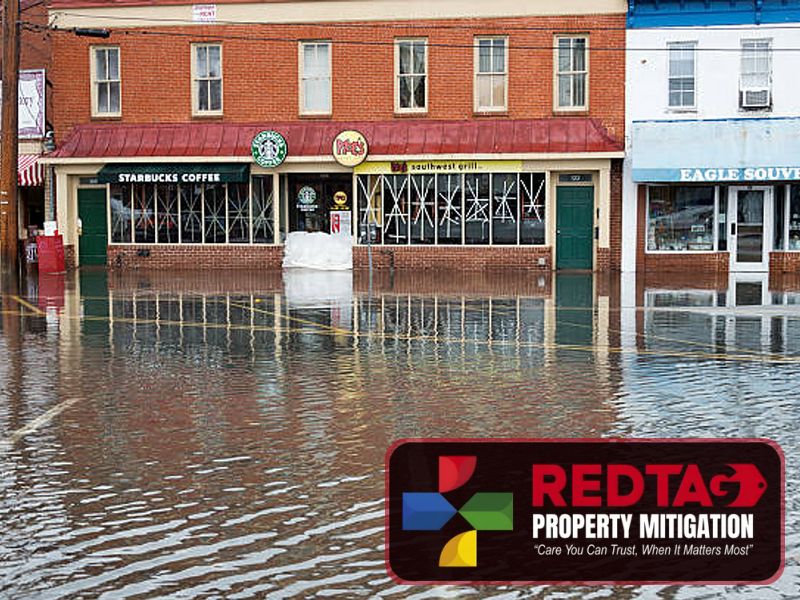
Minimizing downtime in commercial losses depends on rapid response, full-scope assessment, and coordinated execution across all affected areas. Contact RedTag Property Mitigation to discuss the mitigation approach for a specific commercial loss in Modesto.
RedTag Property Mitigation provides commercial and large loss mitigation throughout Modesto from coordinates 37.6391 N, 120.9969 W in California. Service coverage extends across the Central Valley metropolitan area and surrounding suburbs for commercial, multifamily, and large-loss properties.

Commercial and large loss mitigation in Central Modesto covers apartment complexes, retail centers, office buildings, and mixed-use properties across Downtown Modesto, Sylvan, Beyer Park, the College Area, Lakewood, Creekwood, Village One, and the Airport District.
Sub-areas covered: Downtown Modesto, Sylvan, Beyer Park, College Area, Lakewood, Creekwood, Village One, Airport District.
Coverage extends north into Salida, Riverdale Park, Ceres, Turlock, Denair, Keyes, and Hughson. This zone includes multifamily residential developments, commercial strips, and industrial properties along the Highway 99 corridor through Stanislaus County north and south of Modesto.
Sub-areas covered: Salida, Riverdale Park, Ceres, Turlock, Denair, Keyes, Hughson.
Stockton and Tracy are covered as secondary service cities for commercial and large loss mitigation. Coverage includes North Stockton, Lincoln Village, Sherwood Manor, Mountain House, Lathrop, and Manteca for apartment complexes, retail centers, and commercial buildings throughout the corridor between Modesto and Stockton.
Sub-areas covered: North Stockton, Lincoln Village, Sherwood Manor, Mountain House, Lathrop, Manteca.
Coverage extends along the Highway 99 corridor into Merced, Atwater, Livingston, Madera, Clovis, and Fresno. Commercial and large loss mitigation requests from property owners and managers in these communities are handled throughout the Central Valley service area.
Sub-areas covered: Merced, Atwater, Livingston, Madera, Clovis, Fresno.
Select Bay Area locations including Hayward, Livermore, and Pleasanton are covered for commercial large loss situations. Patterson, Newman, and Los Banos in the broader Central Valley are also served within the wider service region.
Sub-areas covered: Hayward, Livermore, Pleasanton, Patterson, Newman, Los Banos.
Contact RedTag Property Mitigation to confirm commercial mitigation availability for a specific property location in Modesto. Coverage information is available for all commercial zones and surrounding communities throughout the full Central Valley service area.
These questions address the most common points raised about commercial and large loss mitigation for apartment complexes, retail properties, offices, and other commercial buildings throughout Modesto and the Central Valley.
A large loss assessment is planned to cover the full affected scope on the initial visit rather than expanding incrementally. The assessment identifies all affected areas, establishes the relationship between them, and determines which can be mitigated simultaneously. This upfront approach allows equipment and crew deployment to be planned for the full project scope rather than adjusted as additional affected areas are discovered during work in progress.
In many cases yes, depending on which areas are affected and which are not. The assessment identifies areas that are safe to occupy during the mitigation period and communicates that clearly to the building owner and tenants. Work in occupied adjacent areas is scheduled and managed to minimize impact. Areas that cannot be safely occupied during active mitigation work are identified early so relocation arrangements can be made promptly.
Documentation is maintained in a way that allows the records for each affected area or unit to be extracted separately if different insurance carriers or adjusters require independent documentation for their respective claims.Insurance and adjuster support provides the coordination and documentation format that allows multiple parallel claim processes to proceed from the same project record without conflicts or documentation gaps.

Building owners and property managers receive regular updates on drying progress, current moisture readings for all affected areas, and the projected timeline to completion.Property management support describes the reporting structure and communication protocols available for portfolio clients and building managers with ongoing mitigation projects across multiple properties.
Contents protection in a large commercial loss follows the same process as residential pack-out but scaled to the volume and type of contents involved.Commercial contents pack-out covers equipment, inventory, business records, and furniture. Digital inventory documentation is completed for every item at the time of removal. Secure storage holds items during the mitigation period with documented return to the restored property.
Yes. Commercial properties do not limit their losses to business hours and neither does the response. Call(209) 424-8233 at any time to report a commercial loss and arrange an assessment. The initial response for a large commercial loss is prioritized to reach the property and begin assessment as quickly as possible after notification.
Documentation for a large commercial loss covers the full project from initial assessment through completion. This includes scope records for each affected area, daily drying logs with moisture readings, equipment placement and usage records, photo documentation, and the final project close record. The documentation package is formatted to support both the property damage claim and any business interruption claim associated with the loss.

Contact RedTag Property Mitigation for additional questions about commercial and large loss mitigation for specific property types in Modesto and the surrounding Central Valley.
RedTag Property Mitigation handles commercial and large loss mitigation for apartments, retail centers, offices, warehouses, and multifamily properties throughout Modesto and the surrounding Central Valley. Call(209) 424-8233 to discuss a specific commercial loss situation.
Contact RedTag Property Mitigation for information about commercial and large loss mitigation in Modesto. Questions about response scope, documentation, tenant communication, and coordination with property management and insurance carriers can be answered.