How RedTag Property Mitigation approaches mitigation work in Modesto, CA. IICRC-certified, CSLB licensed, and documented to the standard insurance carriers, property managers, and building owners require.
When a property in Modesto sustains water damage, fire or smoke damage, mold, storm damage, or a biohazard situation, the mitigation contractor doing the work determines whether the damage is properly contained and dried, whether the insurance documentation is complete enough to support the claim, and whether the work is performed to a standard that holds up under adjuster or regulatory review. RedTag Property Mitigation is IICRC-certified and CSLB licensed, serving Modesto, CA and the Central Valley with documented mitigation processes applied consistently across every project type and property size. This section of the site explains how the work is approached, what the certifications and licenses mean in practice, and what the process looks like from initial call through project completion. Call888-RED-1-TAG with questions about a specific property situation in Modesto.
Let’s get your project quote started.

About RedTag Property Mitigation covers who the company is, where it operates, what property types it handles, and the scope of services provided across Modesto and the Central Valley. The about page gives property owners and managers the basic background they need to understand who they are working with before a project begins. It covers the service area, the range of mitigation work handled, the license and certification status, and the types of clients and situations served throughout Stanislaus County and the surrounding region.
How We Work describes the process from the initial call through project completion in plain terms. It covers what happens when a mitigation situation is reported, how the assessment is conducted, how the scope is confirmed with the property owner or manager, how work proceeds across the active mitigation phases, and how the project is documented and closed. Understanding the process before work begins reduces uncertainty and makes the project easier to manage for the property owner, property manager, and insurance carrier involved.
Standards and Certifications covers the IICRC certifications that govern how mitigation work is performed, the CSLB contractor license that authorizes construction-related mitigation activity in California, and what those credentials mean for the property owner in practical terms. It explains the specific IICRC standards applied to each service type, how certification affects the documentation produced, and what the CSLB license covers in the context of mitigation work. Property owners, adjusters, and managers who want to understand the standards behind the work can find that information on the standards and certifications page.
Contact RedTag Property Mitigation at888-RED-1-TAG with questions about any aspect of how work is approached or documented for a specific property situation in Modesto or the Central Valley.
The Why Work With Us section covers three topics that property owners, property managers, and insurance professionals commonly want to understand before engaging a mitigation contractor for a commercial or residential loss in Modesto.
Every mitigation project in Modesto follows the same approach regardless of the property type or the size of the loss. The assessment is thorough, the scope is documented before work begins, the work follows the applicable IICRC standard, and the documentation is produced during the project rather than assembled afterward.
The initial assessment establishes the extent of the affected area, the cause and type of damage, and the mitigation approach required before any active work starts. Mitigation work that begins without a thorough assessment frequently expands in scope after crews have started because the full extent of the damage was not understood at the outset. An accurate assessment on the first visit allows the scope, timeline, and documentation to be planned for the actual situation rather than adjusted reactively as additional damage is discovered.
Before active mitigation begins, the scope is confirmed with the property owner or property manager. The confirmation establishes what work will be done, in which areas, with what access requirements, and over what timeline. This step prevents misunderstandings about what the mitigation project involves and ensures the property owner or manager can make informed decisions about tenant communication, insurance reporting, and any temporary arrangements required during the active work phases.
All mitigation work is performed to the applicable IICRC standard for the service type.Water mitigation follows IICRC S500.Mold remediation follows IICRC S520.Fire and smoke cleaning follows IICRC S700. Performing work to a defined standard means the process is consistent across projects and the documentation can reference the standard applied, which is relevant to insurance review and any subsequent regulatory or legal assessment of the work.
Project records are created as work proceeds rather than assembled from memory after completion. Assessment records are created on the day of the first visit. Drying logs are maintained every day of the active drying period. Photo documentation is taken at each phase of the project. Documentation produced during the project is more accurate, more credible to insurance adjusters, and more useful in any dispute context than records produced after the fact.
At project close the property owner receives a complete documentation package covering the full project from initial assessment through completion. Forinsurance and adjuster review the package is formatted to support direct claim review. Forproperty management clients the package is formatted to support owner reporting and insurance submission. The property is confirmed ready for re-occupancy or reconstruction before the project is closed.
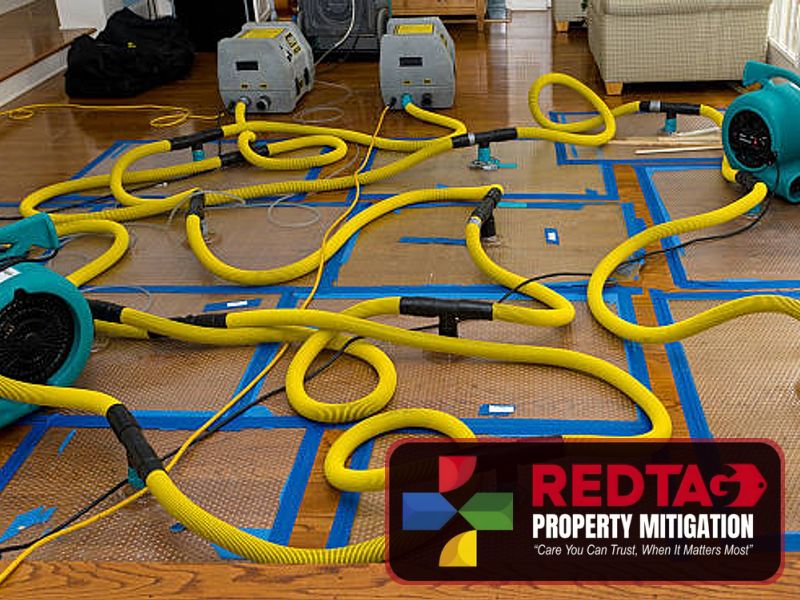
Contact RedTag Property Mitigation at888-RED-1-TAG to discuss how the mitigation process applies to a specific property situation in Modesto. Questions about scope, timeline, documentation, and certification can be answered before work begins.
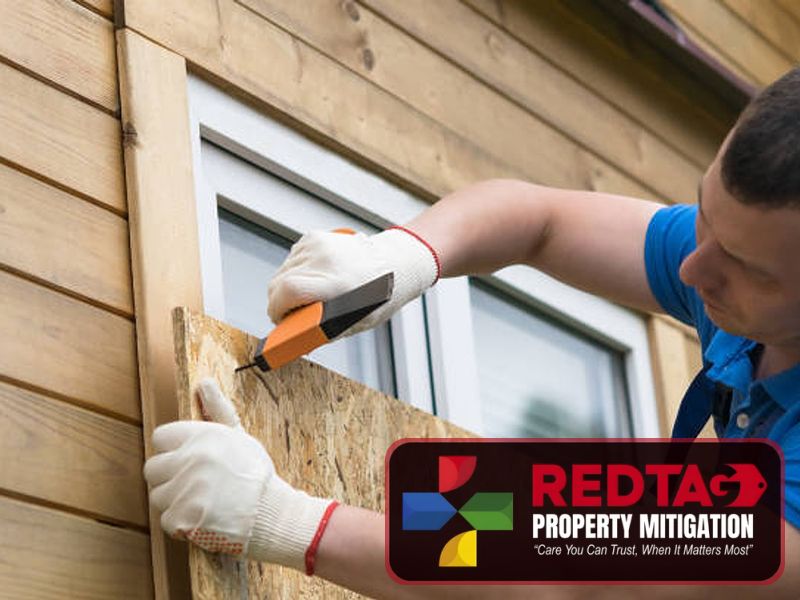
The IICRC is the Institute of Inspection, Cleaning and Restoration Certification. IICRC certification means that mitigation work is performed following the standards the organization has developed for each service type. The standards most relevant to RedTag’s services are S500 for water damage restoration, S520 for mold remediation, and S700 for fire and smoke restoration. Full details on what each standard covers and how it applies to the work are on theStandards and Certifications page.
The California Contractors State License Board license authorizes construction-related work on California properties. Mitigation work that involves demolition, structural drying, flood cuts, and material removal requires a licensed contractor. Working with an unlicensed contractor for this type of work creates liability for the property owner and may affect the insurance claim. CSLB license number 1130391. Full details are on theStandards and Certifications page.
IICRC certification means the mitigation process follows a defined standard, the documentation produced references that standard, and an adjuster or regulatory reviewer can assess the work against the published standard rather than making a judgment call. CSLB licensing means the contractor is authorized to perform the scope of work involved in commercial and residential mitigation in California. Both credentials are verifiable by the property owner, adjuster, or any other party reviewing the project.
Documentation produced on every project references the applicable IICRC standard for the service type. Drying logs follow the moisture monitoring approach defined in S500. Mold remediation records reference the containment, engineering controls, and clearance approach defined in S520. Fire and smoke cleaning records reference the surface assessment and cleaning scope defined in S700. Referencing the standard in the documentation allows any party reviewing the project after completion to assess the work against a published benchmark.
Mitigation work on commercial and residential properties in Modesto requires both the appropriate contractor license and adequate insurance coverage. Working with a contractor that is not properly licensed or insured creates direct liability for the property owner if something goes wrong during the project. Full licensing and insurance details are available on theStandards and Certifications page. Contact888-RED-1-TAG to request verification of current license and insurance status.
IICRC certification and CSLB licensing are the two primary credentials that govern mitigation work in California. Both are relevant to property owners, property managers, and insurance carriers evaluating a mitigation contractor.
Contact RedTag Property Mitigation at888-RED-1-TAG to discuss certifications, licensing, or the standards applied to a specific service type for a property in Modesto.
Mitigation documentation is not a byproduct of the work. It is the record that the insurance carrier uses to assess the claim, the property owner uses to protect their position, the adjuster uses to verify the scope, and any regulatory authority uses to confirm compliance. Documentation produced to the right standard on every project is what makes all of these outcomes possible.
An insurance claim for mitigation work is assessed against the documentation produced during the project. A claim with complete daily drying logs, moisture mapping records, Xactimate-compatible scope lines, and organized photo documentation moves through the adjustment process more efficiently than a claim submitted with incomplete records.Insurance and adjuster support describes the documentation format used on every project and how it is structured for direct adjuster review.
A complete project record protects the property owner if the mitigation work is questioned after the fact. If a tenant disputes the scope of the damage, if a subsequent buyer asks about prior losses, or if a regulatory authority reviews a biohazard remediation, the project documentation is the evidence that the work was done correctly and to the applicable standard. Documentation assembled after the fact is less credible and less useful than records created during the project.
Property managers overseeing mitigation work on behalf of building owners need accurate, timely information about the project to meet their own reporting obligations.Property management support describes how regular project updates and structured documentation allow property managers to report to owners and insurance carriers accurately throughout the project without needing to be on site for every phase of the work.
Biohazard remediation in California has specific regulatory documentation requirements including the biohazardous waste disposal manifest.Biohazard compliance documentation covers how these requirements are met on every biohazard project and what records are produced to confirm compliant disposal and decontamination. Regulatory compliance is documented throughout the project, not assumed or confirmed retroactively.
At project close, the property owner is notified that the affected area has been returned to conditions suitable for re-occupancy or reconstruction. This notification is supported by the project documentation, not issued on the contractor’s word alone. Drying verification records, decontamination verification records, and the project close documentation confirm that the required standard was reached before the space is returned to use.
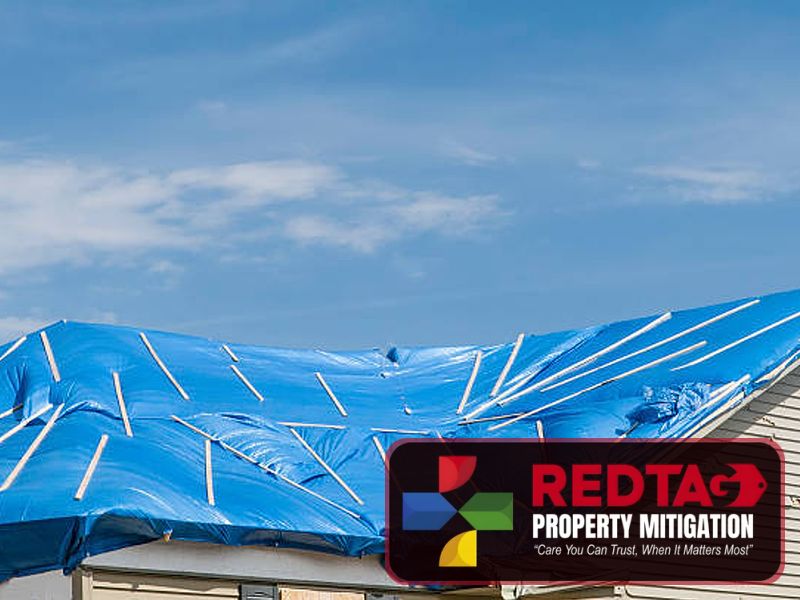
Documentation is the thread that runs through every phase of a mitigation project in Modesto. Contact RedTag Property Mitigation to discuss how documentation is produced and used for a specific service type or property situation.
RedTag Property Mitigation serves property owners, property managers, and insurance professionals throughout Modesto from coordinates 37.6391 N, 120.9969 W in California. Service coverage extends across the Central Valley metropolitan area and surrounding suburbs for all commercial and residential mitigation situations.

Mitigation services for all property types in Central Modesto cover Downtown Modesto, Sylvan, Beyer Park, the College Area, Lakewood, Creekwood, Village One, and the Airport District. All mitigation service types and all project sizes are handled throughout the central zone of the city.
Sub-areas covered: Downtown Modesto, Sylvan, Beyer Park, College Area, Lakewood, Creekwood, Village One, Airport District.
Coverage extends north into Salida, Riverdale Park, Ceres, Turlock, Denair, Keyes, and Hughson. Residential, multifamily, and commercial properties along the Highway 99 corridor through Stanislaus County are served throughout this zone with the same process and documentation standard as Central Modesto projects.
Sub-areas covered: Salida, Riverdale Park, Ceres, Turlock, Denair, Keyes, Hughson.
Stockton and Tracy are covered as secondary service cities. Coverage includes North Stockton, Lincoln Village, Sherwood Manor, Mountain House, Lathrop, and Manteca for commercial and residential mitigation throughout the corridor between Modesto and Stockton.
Sub-areas covered: North Stockton, Lincoln Village, Sherwood Manor, Mountain House, Lathrop, Manteca.
Coverage extends along the Highway 99 corridor into Merced, Atwater, Livingston, Madera, Clovis, and Fresno. Property owners, managers, and insurance professionals in these communities are served throughout the Central Valley service area.
Sub-areas covered: Merced, Atwater, Livingston, Madera, Clovis, Fresno.
Select Bay Area locations including Hayward, Livermore, and Pleasanton are covered for commercial mitigation situations. Patterson, Newman, and Los Banos in the broader Central Valley are also served within the wider service region.
Sub-areas covered: Hayward, Livermore, Pleasanton, Patterson, Newman, Los Banos.
Contact RedTag Property Mitigation to confirm service availability for a specific property location in Modesto. Coverage information is available for all zones and surrounding communities throughout the full Central Valley service area.
These questions address the most common points raised by property owners, property managers, and insurance professionals considering mitigation services in Modesto and the Central Valley.
IICRC certification means the mitigation work follows a published standard specific to the service type. For water damage that is IICRC S500, for mold it is S520, for fire and smoke it is S700. The standard defines how the work is performed, how the scope is assessed, and what the documentation should record. Full details on each standard and how it applies to the work are on theStandards and Certifications page.
The CSLB license authorizes construction-related work on California properties. Mitigation work involving flood cuts, structural drying, demolition, and material removal falls within the scope of work that requires a licensed contractor. Working with an unlicensed contractor for this work creates liability for the property owner and may affect the insurance claim. License details are on theStandards and Certifications page.
TheHow We Work page describes the full process from the initial call through project completion in plain terms. It covers the assessment, scope confirmation, active work phases, documentation, and project close. Property owners who want to understand what to expect before calling can review that page to get a clear picture of how the process works for their specific situation.

The documentation produced depends on the service type. Water damage projects produce moisture mapping records, daily drying logs, equipment records, and photo documentation. Fire and smoke projects produce damage assessment records, cleaning scope records, and photo documentation by phase. Mold projects produce assessment, remediation scope, and clearance records. Biohazard projects produce containment records, disposal manifests, disinfection records, and decontamination verification. All documentation is formatted for insurance carrier and adjuster review.
Yes. The assessment, scope confirmation, and documentation process can be explained for a specific situation before any decision is made to proceed. Call888-RED-1-TAG to discuss a specific property situation in Modesto. The process for that situation, the services that would apply, and what the documentation will cover can all be covered in that initial conversation.
The technical mitigation process is the same for commercial and residential properties. What differs is the coordination structure, the reporting chain, and the documentation format.Commercial and large loss situations require simultaneous multi-area response, tenant communication, and documentation across multiple claim files.Property management clients need centralized reporting and documentation formatted for owner and insurance submission. The applicable approach for a specific property type is discussed during the initial assessment.
Yes. Mitigation emergencies occur at all hours and the response is available around the clock. Call888-RED-1-TAG at any time to report a mitigation situation in Modesto. Water losses, post-fire stabilization, storm damage, and biohazard situations are all handled regardless of when they occur.

Contact RedTag Property Mitigation for additional questions about how mitigation work is approached, documented, and delivered for commercial and residential properties in Modesto and the Central Valley.
RedTag Property Mitigation provides IICRC-certified, CSLB licensed mitigation for water, fire, mold, storm, contents, and biohazard situations throughout Modesto and the Central Valley. Call888-RED-1-TAG to discuss a specific property situation or to ask about the process, certifications, or documentation for any service type.
Contact RedTag Property Mitigation for information about how mitigation work is performed and documented in Modesto. Questions about the process, licensing, IICRC standards, and documentation format for any project type can be answered.
Quick Find: All Services
Emergency Water Extraction · Structural Drying · Moisture Mapping & Thermal Imaging · Flood Cuts & Drywall Removal · Antimicrobial Treatment · Water Damage Insurance Documentation · Emergency Board Up · Fire Damaged Material Removal · Smoke & Soot Cleaning · Odor Control & Thermal Fogging · Structural Stabilization · Pre Reconstruction Preparation · Mold Containment Barriers · Negative Air Pressure Systems · HEPA Air Scrubbing · Mold Affected Material Removal · Post Remediation Clearance · Emergency Roof Tarping · Storm Board Up · Temporary Shoring · Emergency Debris Removal · Property Loss Prevention · Contents Pack Out · Digital Inventory & Documentation · Secure Contents Storage · Biohazard Containment · Trauma Scene Disinfection · Biohazard Documentation · Storm Debris Removal · Fire Debris Removal · Construction Debris Removal · Renovation Debris Removal · Residential Junk Removal · Emergency 24/7 Junk Removal · Commercial Junk Removal · Property Management Junk Removal · Post Mitigation Debris Hauling · Outdoor & Yard Debris Removal