
Negative air pressure equipment and HEPA exhaust ducting to prevent mold spore migration during commercial remediation in Modesto.
Negative air pressure systems are engineering controls used inside mold remediation containment zones to prevent airborne spores from escaping into clean areas of a building. A negative air machine draws air out of the contained work area and exhausts it through HEPA-filtered ducting to the exterior, creating a pressure differential that directs airflow inward rather than outward. RedTag Property Mitigation sets up and operates negative air pressure systems as part of mold mitigation work throughout Modesto, CA and the Central Valley. Equipment deployment follows IICRC S520 containment airflow standards. Call(209) 424-8233 for 24/7 emergency response in Modesto.
Let’s get your project quote started.

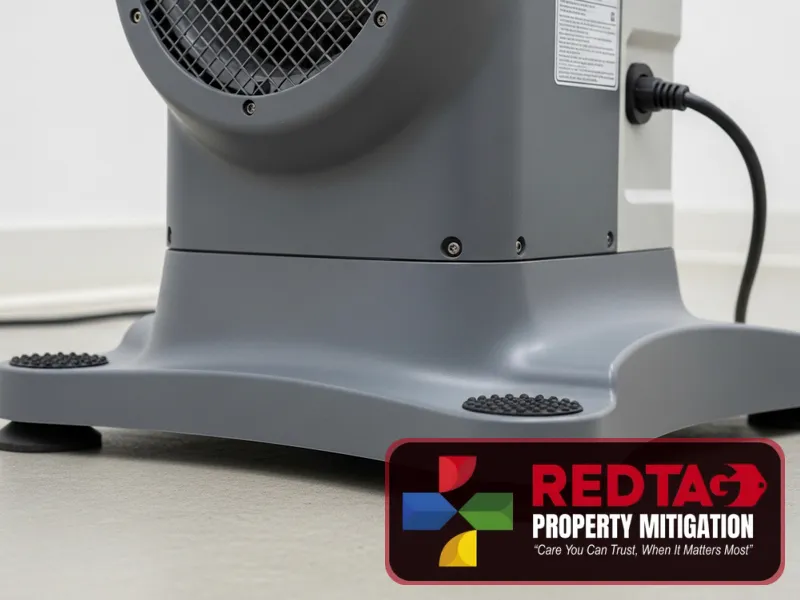
A negative air machine is the central piece of equipment used to create and maintain negative pressure inside a containment zone. The machine draws air from inside the contained area and exhausts it through attached ducting to the exterior of the building. Units are sized based on the cubic footage of the contained work area and the required air changes per hour. Multiple machines are deployed in larger containment zones to maintain consistent pressure throughout the entire work area.
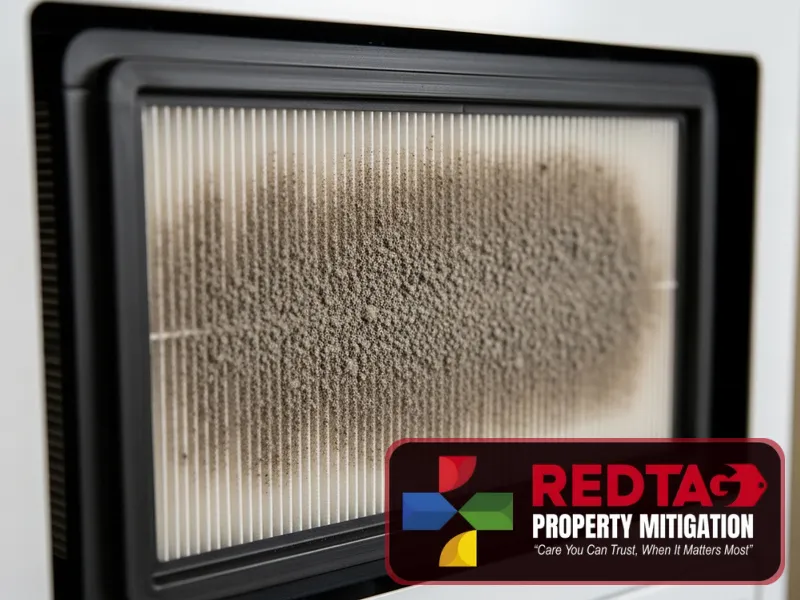
Air exhausted from the negative air machine passes through a series of filters, with a true HEPA filter at the final stage. HEPA filtration captures particles down to 0.3 microns, which includes mold spores ranging from 1 to 30 microns in size. The HEPA filter prevents spores drawn from the work area from being released into the exterior environment through the exhaust duct. Filters are inspected and replaced based on usage and the spore load of the affected area.
Flexible ducting connects the negative air machine exhaust port to an exterior opening such as a window, door, or purpose-cut penetration. The duct routes the exhausted air directly outside the building rather than into other interior spaces. Ducting is secured at both ends and inspected for leaks or gaps that could allow unfiltered air to be released into adjacent rooms. The exhaust discharge point is positioned to direct air away from building re-entry points and occupied areas.
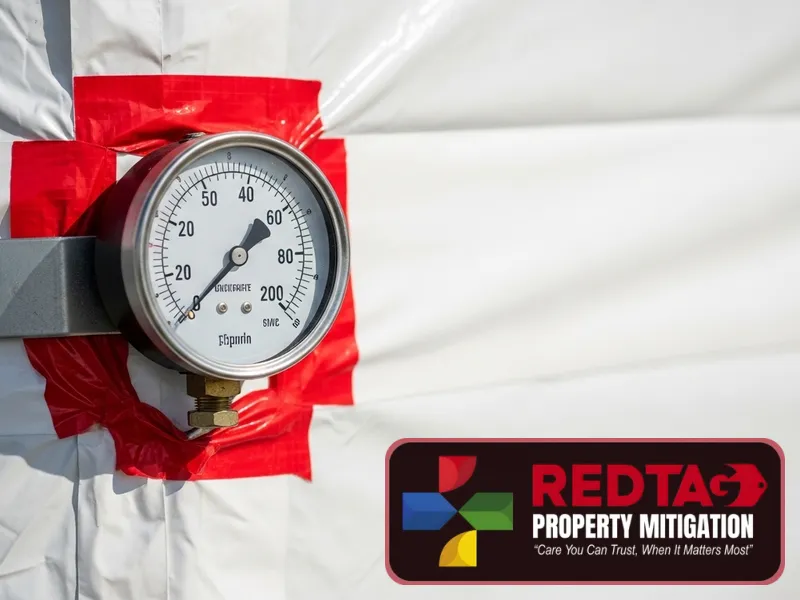
Once negative air equipment is running, pressure differential is verified to confirm that the containment zone is operating at lower pressure than the surrounding spaces. This is measured using a pressure gauge or manometer at the containment boundary. A verified pressure differential confirms that airflow is moving inward into the work zone rather than outward. Verification is performed at the start of each workday and after any containment entry that may affect pressure balance inside the zone.

The number of air changes per hour inside the containment zone determines how quickly airborne mold spores are captured and removed from the work area. IICRC S520 specifies minimum air change requirements for mold remediation containment. The cubic footage of the contained space is used to calculate the machine capacity required to meet those air change targets. Under-powered equipment that does not achieve the required air changes leaves elevated spore concentrations inside the zone during work.
Negative air machines run continuously throughout the remediation project during all working hours and are left running overnight in active containment zones when material removal is not yet complete. Equipment is checked at the start and end of each workday for filter condition, exhaust connection integrity, and operating status. Any equipment failure is addressed before remediation work resumes. The operating record of the negative air system forms part of the project documentation compiled for insurance review.
Commercial properties with mold affecting multiple rooms, floors, or building sections may require separate negative air machine setups for each containment zone. Each zone operates independently with its own machine and exhaust path to maintain correct pressure differentials throughout the building. Multi-zone configuration is coordinated with themold containment barriers and engineering controls installed at each zone boundary, ensuring that the full scope of affected areas is addressed without cross-zone contamination during work.
The negative air pressure setup is documented as part of the overall mold remediation project record. Documentation includes photographs of machine placement, exhaust duct routing, filter condition records, pressure differential readings, and daily equipment check logs. This record is included in the project documentation package provided to the insurance carrier, adjuster, and clearance inspector. Complete negative air documentation supports the verification that appropriate engineering controls were in place throughout the remediation per IICRC S520 requirements.
Contact RedTag Property Mitigation for information about negative air pressure systems for mold mitigation in Modesto. Equipment sizing and configuration can be confirmed for specific properties.
Negative air pressure system setup in Modesto covers several components, each playing a specific role in managing airflow inside mold remediation containment zones.
Negative air pressure is the engineering control that keeps a containment zone functional throughout remediation. It is a required component of the broadermold mitigation support process in Modesto.
Negative air pressure system setup follows IICRC S520 requirements for containment airflow, air changes per hour, and HEPA exhaust filtration. Meeting these standards ensures the engineering controls satisfy insurance carrier expectations and provide verifiable evidence that the containment zone was properly managed throughout the project.
Commercial mold situations in offices, retail buildings, warehouses, and multifamily properties involve larger contained volumes than most residential jobs. Equipment is sized based on the cubic footage of each containment zone to achieve the air change rates required by IICRC S520 throughout all affected sections of the property.
Negative air machine placement and exhaust routing are planned in conjunction withmold containment barriers and engineering controls. The position of the machine, the entry airlock, and the exhaust duct exit are determined together so the containment zone functions as a unified, pressure-controlled system.
Equipment performance is checked and recorded at the start and end of each workday. Filter condition, pressure differential, and exhaust connection integrity are documented throughout the project. These records are included in the remediation documentation package and support the insurance claim and clearance inspection process.
Mold situations often follow water intrusion events that require same-day containment and air control setup to prevent further spread. Negative air pressure system deployment is available around the clock for commercial and residential properties in Modesto. Call(209) 424-8233 for emergency dispatch.
Contact RedTag Property Mitigation at(209) 424-8233 to discuss negative air pressure system requirements for a specific mold situation at a commercial or residential property in Modesto.

Before equipment is placed, the cubic footage of the contained work area is calculated. Required air changes per hour are determined based on IICRC S520 standards. Machine capacity is matched to the containment volume, and additional units are scheduled if a single machine cannot achieve the required air change rate.
The negative air machine is positioned inside the containment zone at a location that draws air across the work area rather than creating a short-circuit flow path. Flexible HEPA exhaust ducting is attached and routed through the most direct path to an exterior opening, minimizing duct length and bends.
With the machine running, pressure differential between the inside of the containment zone and the adjacent clean space is measured and confirmed. The containment boundary is inspected for air movement that would indicate gaps in the sheeting barriers. Verified negative pressure is documented before remediation work begins inside the zone.
The negative air system operates continuously during allmold affected material removal andHEPA air scrubbing and filtration work inside the zone. The machine remains running overnight when active remediation is ongoing. Equipment status is checked at the start of each workday before crews enter the containment area.
Once remediation is complete and the site is prepared forpost-remediation clearance preparation, negative air equipment records are compiled into the project file. Equipment is removed from the containment zone only after clearance testing is complete and containment barriers are ready to be taken down.
Negative air pressure system setup in Modesto follows a defined sequence from site assessment through daily monitoring and final documentation across the remediation project.
Contact RedTag Property Mitigation at(209) 424-8233 for information about negative air pressure system setup for mold remediation projects in Modesto.
Properly configured negative air pressure systems protect unaffected building areas from mold spore migration, manage airborne spore concentrations inside the work zone, and produce the equipment records required for insurance review and clearance verification in Modesto.
Negative pressure inside the containment zone causes air to flow inward from clean areas rather than outward from the work zone. This directional airflow prevents mold spores disturbed during material removal and cleaning from escaping the containment area into adjacent offices, units, or common spaces.
Continuous air cycling through the HEPA exhaust filter progressively reduces the concentration of airborne spores inside the containment zone during the project. Lower airborne spore counts inside the work area reduce exposure for the remediation crew and improve the conditions needed to pass clearance testing.
Air exhausted from the containment zone passes through a true HEPA filter before being discharged to the exterior. This prevents mold spores captured from the work area from being released outside the building through the exhaust duct, protecting adjacent outdoor areas and re-entry points.
Daily equipment logs, pressure differential readings, filter records, and machine placement photographs are compiled throughout the project. This documentation provides evidence to the insurance carrier that appropriate engineering controls were maintained throughout the remediation, supporting claim review and reducing the risk of disputes over remediation scope.
Post-remediation clearance testing by a certified industrial hygienist requires that the containment zone maintained appropriate airflow and spore control throughout remediation. A documented negative air pressure system record demonstrates that IICRC S520 engineering control requirements were met, supporting a valid and accurate clearance test result.

These outcomes make negative air pressure system setup a required engineering control for mold remediation in Modesto. Contact RedTag Property Mitigation to discuss equipment requirements for a specific commercial or residential mold situation.
RedTag Property Mitigation sets up negative air pressure systems for mold remediation throughout Modesto from coordinates 37.6391 N, 120.9969 W in California. Service coverage extends across the Central Valley metropolitan area and surrounding suburbs.
Negative air pressure system setup in Central Modesto covers commercial and residential properties across Downtown Modesto, Sylvan, Beyer Park, the College Area, Lakewood, Creekwood, Village One, and the Airport District throughout the central zone of the city.
Sub-areas covered: Downtown Modesto, Sylvan, Beyer Park, College Area, Lakewood, Creekwood, Village One, Airport District.
Coverage extends north into Salida, Riverdale Park, Ceres, Turlock, Denair, Keyes, and Hughson. This zone includes residential subdivisions, multifamily properties, and commercial buildings along the Highway 99 corridor through Stanislaus County north and south of the city.
Sub-areas covered: Salida, Riverdale Park, Ceres, Turlock, Denair, Keyes, Hughson.
Stockton and Tracy are covered as secondary service cities for mold remediation engineering controls. Coverage includes North Stockton, Lincoln Village, Sherwood Manor, Mountain House, Lathrop, and Manteca for commercial mold situations throughout the corridor between Modesto and Stockton.
Sub-areas covered: North Stockton, Lincoln Village, Sherwood Manor, Mountain House, Lathrop, Manteca.
Coverage extends along the Highway 99 corridor into Merced, Atwater, Livingston, Madera, Clovis, and Fresno. Negative air pressure system deployment for mold mitigation projects in these communities is handled throughout the Central Valley service area.
Sub-areas covered: Merced, Atwater, Livingston, Madera, Clovis, Fresno.
Select Bay Area locations including Hayward, Livermore, and Pleasanton are covered for commercial mold remediation projects requiring negative air pressure engineering controls. Patterson, Newman, and Los Banos in the broader Central Valley are also served within the wider service region.
Sub-areas covered: Hayward, Livermore, Pleasanton, Patterson, Newman, Los Banos.
Contact RedTag Property Mitigation to confirm negative air pressure system availability for mold remediation projects in specific Modesto locations. Coverage information is available for all suburbs listed throughout the Central Valley service area.
These questions address the most common points raised about negative air pressure systems during mold remediation at commercial and residential properties in Modesto.
A negative air pressure system uses a machine inside the containment zone to draw air outward through a HEPA exhaust filter, creating lower pressure inside the zone than outside. This makes air flow inward and prevents spores from escaping the contained work area.
Material removal and surface cleaning during mold remediation disturbs mold colonies and releases spores into the air. Without negative pressure, those spores can migrate through gaps in containment barriers into clean areas. Negative pressure controls airflow direction to keep spores inside the work zone.
IICRC S520 specifies a minimum of four air changes per hour inside a remediation containment zone. In situations with heavy contamination or elevated spore counts, higher air change rates may be applied to reduce airborne spore concentrations more rapidly during the project.
The negative air machine runs continuously during all working hours while remediation is active inside the containment zone. It is also left running overnight when material removal is not yet complete. Equipment operation is logged daily as part of the project documentation.
If the negative air machine fails, work inside the containment zone stops until the equipment is repaired or replaced. Operating inside an active mold containment zone without functioning negative air pressure risks spreading spores to unaffected areas through gaps in the containment barriers.
They are different but complementary. Negative air pressure controls the direction of airflow to prevent spore escape from the containment zone.HEPA air scrubbing and filtration captures airborne spores already inside the zone. Both systems typically operate together throughout the remediation project.

Contact RedTag Property Mitigation for additional questions about negative air pressure systems for mold remediation in Modesto and the Central Valley.
RedTag Property Mitigation deploys negative air pressure systems for mold remediation throughout Modesto and the Central Valley. Call(209) 424-8233 for 24/7 emergency response.
Contact RedTag Property Mitigation for information about negative air pressure systems in Modesto. Questions about equipment sizing, setup, and project scope can be answered.