
Hospital-grade disinfection of all surfaces in the affected area following biohazard containment and removal in Modesto, CA. Discreet, documented decontamination for residential and commercial properties.
Trauma scene disinfection and decontamination treats all surfaces remaining within the affected area after biological material has been removed, using hospital-grade disinfectants applied in the sequence required to achieve the decontamination standard for the specific pathogens or contamination type present. Disinfection follows containment and removal and is carried out while the containment perimeter remains in place, so cross-contamination into unaffected areas is prevented throughout the treatment phase. All work is done discreetly and with full protective measures throughout the project. RedTag Property Mitigation provides trauma scene disinfection and decontamination throughout Modesto, CA and the surrounding Central Valley under CSLB license number 1130391. Request a quote by filling in our online form for the fastest response.
Let’s get your project quote started.

Pre-disinfection surface assessment confirms that all biological material has been removed before disinfection begins. Disinfectants applied to surfaces with residual biological material are less effective because organic matter interferes with disinfectant action. The assessment identifies any remaining contamination that needs to be addressed before product application and confirms the full disinfection boundary within the containment perimeter.
The disinfectant products used are selected based on the pathogens or contamination type identified during the initial assessment. Hospital-grade disinfectants registered with the EPA for the relevant pathogen categories are used throughout. Product selection also accounts for the surface types within the affected area, since some disinfectants are not appropriate for certain materials and can cause additional damage if used incorrectly on incompatible surfaces.
Hard surfaces are cleaned of any residual organic material before disinfectant is applied. Disinfectants require direct contact with the surface to be effective. Any film, residue, or remaining contamination that prevents that direct contact reduces the effectiveness of the disinfection treatment. Surface preparation is completed for every surface within the disinfection boundary before product application begins.
Disinfectant is applied to all surfaces within the containment perimeter including floors, walls, ceilings where indicated, structural elements, and any fixed items remaining in the affected area. Application covers the primary affected area and all adjacent surfaces identified as having secondary biological exposure. No surface within the assessed contamination boundary is left untreated.

Each disinfectant product has a required dwell time during which the product must remain wet on the surface to achieve the stated efficacy against the target pathogen. Dwell time requirements vary by product and pathogen. The dwell time for each product used is observed strictly. Wiping surfaces before the dwell time is complete reduces efficacy and means the stated decontamination standard has not been met for that surface.
Some situations require multiple disinfection cycles to achieve the required decontamination standard. Heavily contaminated surfaces, surfaces with complex geometries that are difficult to coat evenly, and situations involving specific pathogens with higher resistance to standard disinfectants may require repeat application cycles. The number of cycles is determined by the contamination type, the surface condition, and the decontamination standard required.
Biological contamination produces odor that persists in affected surfaces and air spaces even after visible contamination has been removed and surfaces have been disinfected. Odor treatment is applied to the affected area as part of the decontamination process. Treatment addresses residual odor in surfaces, sub-surface materials, and the air space within the containment zone. Effective odor treatment is part of returning the space to conditions suitable for re-occupancy.
When disinfection and odor treatment are complete, the treated area is assessed to confirm the decontamination standard has been achieved. The results of this assessment, along with the products used, application method, dwell times observed, and number of cycles completed, are recorded and passed to thecompliance documentation stage. The containment perimeter is maintained until documentation is complete and the property owner has been notified that the space is ready.
Contact RedTag Property Mitigation for information about trauma scene disinfection and decontamination in Modesto. The scope for a specific situation can be assessed and discussed confidentially.
Trauma scene disinfection and decontamination in Modesto covers the full surface treatment process from pre-disinfection assessment through product application, dwell time, and verification of the decontamination standard achieved.
The decontamination standard achieved during disinfection determines whether the space is safe for re-occupancy. Product selection, application method, and dwell time compliance all affect whether the required standard is reached for the specific pathogen or contamination type present.
Applying disinfectant before all biological material has been removed from surfaces is a common source of incomplete decontamination. Organic matter on the surface acts as a physical barrier that prevents the disinfectant from reaching the surface directly. The sequence is fixed:containment and removal first, then surface preparation, then disinfection. This sequence is not shortened regardless of the situation or the time pressure involved.
Not all disinfectants are effective against all pathogens, and not all disinfectants are appropriate for all surface types. Using a product that is not registered for the relevant pathogen category means the required decontamination standard cannot be confirmed even if the product is applied correctly. Using a product that is incompatible with the surface type can cause additional damage. Product selection accounts for both variables for every surface in the affected area.
The efficacy claims on disinfectant product labels are based on the product remaining wet on the surface for the stated dwell time. Shorter dwell times produce lower efficacy. In a professional biohazard disinfection context, dwell time compliance is not an optional best practice. It is the mechanism by which the stated decontamination standard is actually achieved. Every surface treated is allowed the full required dwell time before any wiping or additional treatment.
Odor that persists after visible contamination has been removed and surfaces have been disinfected indicates residual biological material in sub-surface layers or air spaces. Odor treatment that addresses only the surface level without treating the air space and sub-surface contamination produces a space that tests clean but remains unpleasant and potentially problematic for re-occupancy. Odor treatment is part of the decontamination scope, not an optional add-on.
Trauma scene disinfection is the second phase of a three-phase process that begins withbiohazard containment and removal and concludes withcompliance documentation. The disinfection record informs the documentation package with product names, EPA registration numbers, application method, dwell times, and the decontamination standard confirmed. Call888-RED-1-TAG to discuss the disinfection requirements for a specific situation in Modesto.
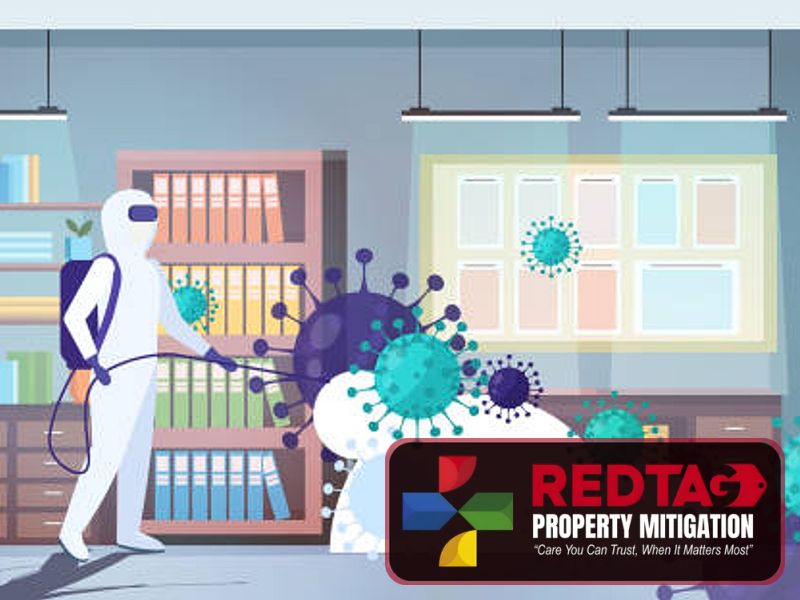
Contact RedTag Property Mitigation at888-RED-1-TAG to discuss trauma scene disinfection and decontamination for a specific residential or commercial property situation in Modesto or the surrounding Central Valley.
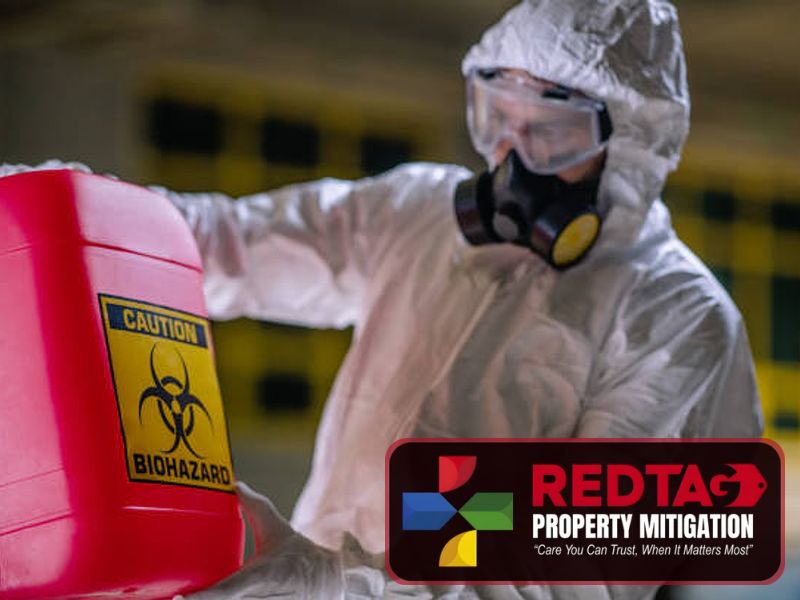
The affected area is assessed afterbiohazard containment and removal is complete to confirm that all biological material has been removed and all surfaces are ready for disinfection. Any remaining contamination identified at this step is addressed before product application begins. The disinfection boundary is confirmed and products are selected for each surface type within the treatment area.
All hard surfaces within the disinfection boundary are cleaned to remove any residual film, dust, or organic material before disinfectant is applied. Surface preparation is a prerequisite for effective disinfection, not an optional step. The preparation method and products used are appropriate for each surface type to avoid damaging materials while achieving a clean surface for disinfectant contact.
Hospital-grade disinfectant is applied to all surfaces within the treatment boundary. Application method, coverage rate, and product concentration are in accordance with the manufacturer’s instructions and the requirements of the relevant EPA registration for the target pathogen category. Coverage is confirmed for every surface in the treatment area before dwell time observation begins.
Each treated surface is allowed the full required dwell time before any additional treatment or wiping is applied. Dwell times vary by product and surface. Multiple surfaces may be treated sequentially to allow efficient use of time while maintaining full dwell time compliance for each surface. No treated surface is wiped or re-treated before its required dwell time has been observed.
Odor treatment is applied to the affected area after disinfection cycles are complete. The treated area is then assessed to confirm the decontamination standard has been achieved. Assessment results, product records, and treatment logs are passed to thecompliance documentation stage. The property owner is notified when disinfection is complete and the space is ready for the next step.
Trauma scene disinfection and decontamination in Modesto follows a defined sequence from pre-disinfection assessment through surface preparation, product application, dwell time observation, and decontamination verification.
Contact RedTag Property Mitigation at888-RED-1-TAG for information about trauma scene disinfection and decontamination in Modesto. The process for a specific situation can be discussed confidentially.
Trauma scene disinfection completed with the correct products, in the correct sequence, with full dwell time compliance produces a space that has been decontaminated to a verifiable standard. That verifiable standard is what supports safe re-occupancy and what the compliance documentation confirms.
Using EPA-registered hospital-grade disinfectants applied according to manufacturer instructions and registered dwell times means the decontamination standard is defined and verifiable, not estimated. The specific products used, their EPA registration numbers, and the conditions of application are all recorded. This record is what allows the compliance documentation to state that a specific decontamination standard was achieved rather than simply that cleaning was performed.
Biological contamination at trauma scenes involves pathogens including bloodborne viruses, bacteria, and other microorganisms that require specific product categories and dwell times for effective inactivation. Surface-level disinfection with appropriate products applied correctly addresses these pathogens at the surface. Areas that were not directly contaminated but fall within the secondary exposure boundary are also treated to the same standard.
Completing odor treatment as part of the decontamination process rather than as a separate subsequent step means the space is assessed for odor as part of the overall decontamination verification. A space that has been disinfected but still has a detectable odor from biological contamination is not fully returned to conditions suitable for re-occupancy. Treating odor within the decontamination scope closes this gap before the project is closed.
When disinfection is complete and the decontamination standard has been verified, the property owner is informed that the space is ready. There is no ambiguity about whether the surface treatment was adequate because the products, method, and dwell times used all correspond to a defined and achievable decontamination standard. Re-occupancy or any subsequent reconstruction work can proceed on that confirmed basis.
The disinfection record compiled during this phase is part of thecompliance documentation package submitted to the insurance carrier. Insurance carriers processing biohazard claims require evidence that decontamination was performed to a professional standard using appropriate products. A record that identifies specific products, EPA registrations, and application conditions provides that evidence more effectively than a general statement that disinfection was completed.

These outcomes make trauma scene disinfection the phase that determines whether the biohazard remediation produced a space that is genuinely safe in Modesto. Contact RedTag Property Mitigation to discuss disinfection requirements for a specific situation.
RedTag Property Mitigation provides trauma scene disinfection and decontamination services throughout Modesto from coordinates 37.6391 N, 120.9969 W in California. Service coverage extends across the Central Valley metropolitan area and surrounding suburbs for residential and commercial properties.

Trauma scene disinfection and decontamination in Central Modesto covers residential and commercial properties across Downtown Modesto, Sylvan, Beyer Park, the College Area, Lakewood, Creekwood, Village One, and the Airport District throughout the central zone of the city.
Sub-areas covered: Downtown Modesto, Sylvan, Beyer Park, College Area, Lakewood, Creekwood, Village One, Airport District.
Coverage extends north into Salida, Riverdale Park, Ceres, Turlock, Denair, Keyes, and Hughson. This zone includes residential subdivisions, multifamily properties, and commercial buildings along the Highway 99 corridor through Stanislaus County north and south of Modesto.
Sub-areas covered: Salida, Riverdale Park, Ceres, Turlock, Denair, Keyes, Hughson.
Stockton and Tracy are covered as secondary service cities for trauma scene disinfection and decontamination. Coverage includes North Stockton, Lincoln Village, Sherwood Manor, Mountain House, Lathrop, and Manteca for residential and commercial properties throughout the corridor between Modesto and Stockton.
Sub-areas covered: North Stockton, Lincoln Village, Sherwood Manor, Mountain House, Lathrop, Manteca.
Coverage extends along the Highway 99 corridor into Merced, Atwater, Livingston, Madera, Clovis, and Fresno. Trauma scene disinfection requests from property managers and building owners in these communities are handled throughout the Central Valley service area.
Sub-areas covered: Merced, Atwater, Livingston, Madera, Clovis, Fresno.
Select Bay Area locations including Hayward, Livermore, and Pleasanton are covered for commercial biohazard disinfection situations. Patterson, Newman, and Los Banos in the broader Central Valley are also served within the wider service region.
Sub-areas covered: Hayward, Livermore, Pleasanton, Patterson, Newman, Los Banos.
Contact RedTag Property Mitigation to confirm trauma scene disinfection and decontamination availability for a specific location in Modesto. Coverage information is available for all suburbs and surrounding communities throughout the full Central Valley service area.
These questions address the most common points raised about trauma scene disinfection and decontamination for residential and commercial properties throughout Modesto and the Central Valley.
Disinfectants work by direct chemical contact with the surface being treated. Biological material on the surface acts as a physical barrier that prevents that direct contact. Applying disinfectant to a surface that still has biological material on it produces incomplete decontamination because the disinfectant cannot reach the surface beneath the contamination.Complete removal before disinfection begins is the sequence that allows the disinfectant to contact the actual surface and achieve the stated decontamination efficacy.
Hospital-grade disinfectants are products registered with the EPA for use in healthcare settings against specific categories of pathogens including bloodborne viruses, bacteria, and fungi. The registration confirms that the product has been tested and found effective against the stated pathogen categories when applied according to the label instructions. Using EPA-registered hospital-grade products means the decontamination standard is defined by the product registration rather than by the contractor’s judgment.
Dwell time is the period during which a disinfectant must remain wet on the surface to achieve the efficacy stated in its EPA registration. The disinfectant works by chemical action over this contact period. If the surface dries or is wiped before the dwell time is complete, the chemical action stops early and the full stated efficacy is not achieved. Dwell time compliance is the practical mechanism by which the decontamination standard is met for each treated surface.

Yes. All surfaces within the disinfection boundary are treated, including floors, walls, ceilings where biological material has reached them, structural elements, and any fixed items remaining in the area. The disinfection boundary is determined by the extent of biological contamination identified during assessment, not by assumptions about which surfaces were likely to be affected. Surfaces at height that show biological contamination are treated with the same product and dwell time compliance as floor-level surfaces.
Odor from biological contamination comes from volatile organic compounds released as biological material breaks down. Surface disinfection addresses the pathogens on the surface but does not by itself eliminate the odor compounds that have migrated into sub-surface materials and the air space. Odor treatment following disinfection uses products designed to neutralize these compounds rather than mask them. Effective odor treatment is part of returning the space to conditions suitable for use.
Duration depends on the size of the affected area, the number of disinfection cycles required, and the dwell times of the products used. A contained primary area in a single room may be completed in several hours. Larger or more complex situations requiring multiple cycles or treatment of multiple rooms take longer. The initial assessment establishes the expected timeframe and the property owner is kept informed of progress throughout.
The property is ready for re-occupancy in the treated area once disinfection has been verified and odor treatment is complete. Thecompliance documentation confirming the decontamination standard achieved is provided to the property owner at project close. If reconstruction or repair work is required in the affected area following the remediation, the area is ready for those trades once the decontamination verification is confirmed.
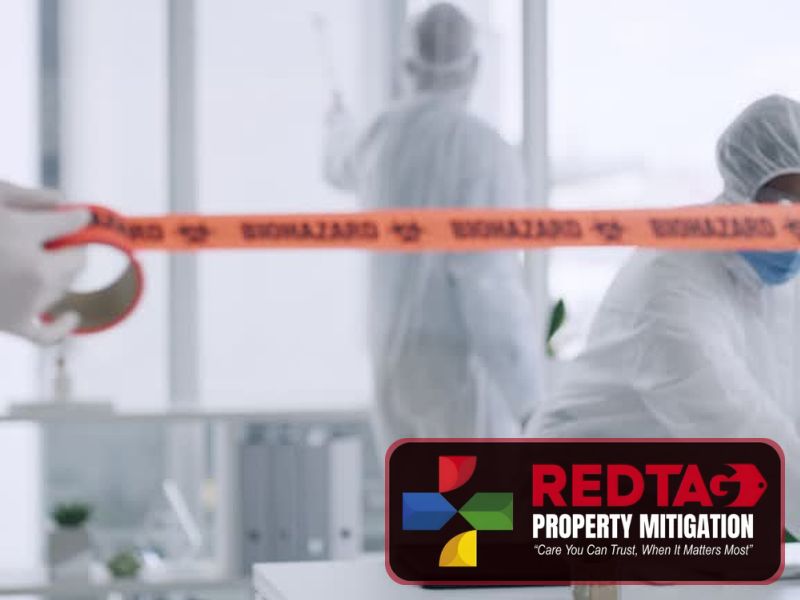
Contact RedTag Property Mitigation for additional questions about trauma scene disinfection and decontamination for residential or commercial properties in Modesto and the surrounding Central Valley.
RedTag Property Mitigation handles trauma scene disinfection and decontamination for residential and commercial properties throughout Modesto and the surrounding Central Valley. Call888-RED-1-TAG to discuss a specific situation.
Contact RedTag Property Mitigation for information about trauma scene disinfection and decontamination in Modesto. Questions about disinfection products, the treatment process, and decontamination documentation can be discussed confidentially.
Quick Find: All Services
Emergency Water Extraction · Structural Drying · Moisture Mapping & Thermal Imaging · Flood Cuts & Drywall Removal · Antimicrobial Treatment · Water Damage Insurance Documentation · Emergency Board Up · Fire Damaged Material Removal · Smoke & Soot Cleaning · Odor Control & Thermal Fogging · Structural Stabilization · Pre Reconstruction Preparation · Mold Containment Barriers · Negative Air Pressure Systems · HEPA Air Scrubbing · Mold Affected Material Removal · Post Remediation Clearance · Emergency Roof Tarping · Storm Board Up · Temporary Shoring · Emergency Debris Removal · Property Loss Prevention · Contents Pack Out · Digital Inventory & Documentation · Secure Contents Storage · Biohazard Containment · Trauma Scene Disinfection · Biohazard Documentation · Storm Debris Removal · Fire Debris Removal · Construction Debris Removal · Renovation Debris Removal · Residential Junk Removal · Emergency 24/7 Junk Removal · Commercial Junk Removal · Property Management Junk Removal · Post Mitigation Debris Hauling · Outdoor & Yard Debris Removal