Thermal fogging, ozone treatment and air scrubbing to address smoke odor embedded in porous materials after commercial fire events in Modesto.
Odor control and thermal fogging addresses smoke odor that has penetrated porous building materials, HVAC systems, and structural assemblies following a fire event. Smoke odor embedded in walls, framing, insulation, and ductwork requires treatment beyond surface cleaning. Thermal fogging, ozone generation, and hydroxyl treatment are applied based on the depth and extent of odor penetration across the property, with the treatment method matched to the materials affected. RedTag Property Mitigation handles odor control and thermal fogging throughout Modesto, CA and the surrounding Central Valley under CSLB license number 1130391. Request a quote by filling in our online form for the fastest response.
Let’s get your project quote started.
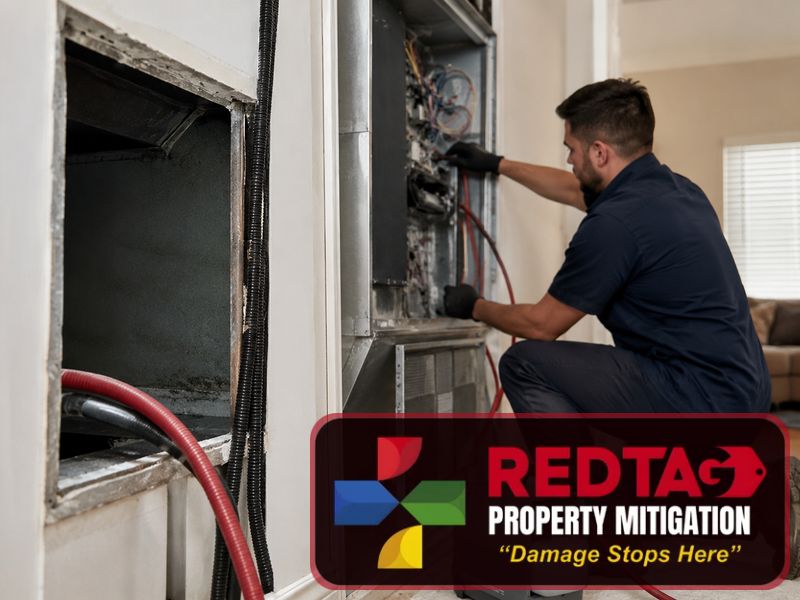
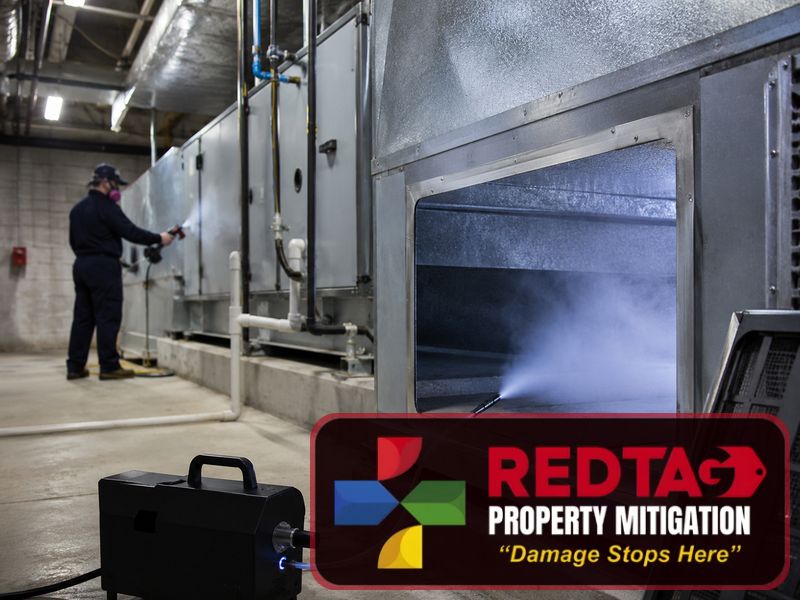
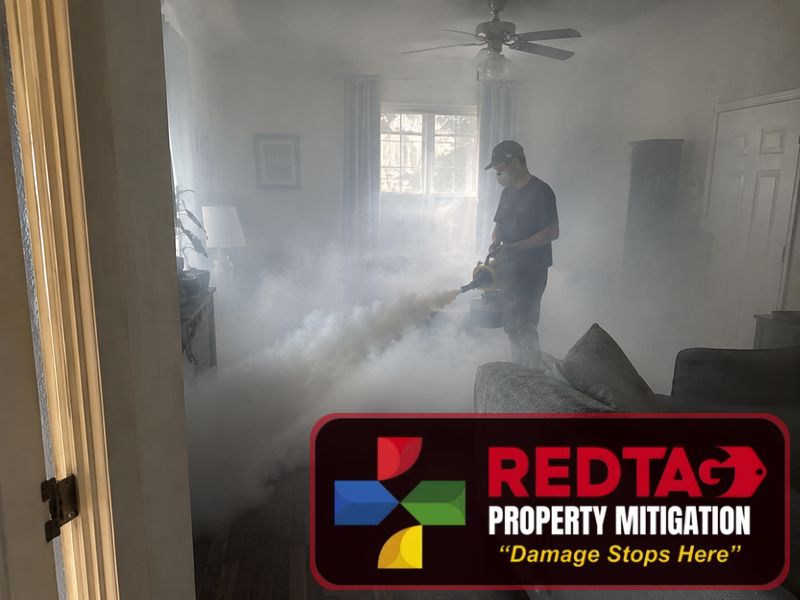
Thermal fogging uses a heated machine to vaporise a deodorising solution into dense fog that is introduced throughout the structure. The fog penetrates all accessible areas including wall cavities, ceiling spaces, ductwork, and porous material surfaces throughout fire-affected zones. The deodorising agent bonds with and neutralises odor-causing compounds embedded in materials. Thermal fogging follows the same pathways smoke took during the fire, reaching odor sources that surface cleaning and air treatment alone cannot address in a commercial building.
Ozone treatment uses ozone generators to produce ozone gas that oxidises odor-causing compounds in the air and on surfaces throughout fire-affected areas. Ozone is effective for breaking down smoke odor compounds in materials and air spaces where other methods may not fully reach. Treatment requires the space to be unoccupied during application and for a defined clearance period afterward before re-entry. Ozone treatment is applied based on the extent and depth of smoke odor penetration throughout the property.
Hydroxyl treatment uses hydroxyl radical generators to neutralise odor compounds in occupied or partially occupied spaces. Hydroxyl radicals break down volatile organic compounds from smoke without requiring the space to be vacated during treatment. This method is applied in situations where re-entry timelines are critical or where ozone treatment is not appropriate for the materials present. Hydroxyl treatment can run continuously in occupied areas throughout the affected sections of the property.
HVAC odor treatment addresses smoke odor that has entered and distributed through the ventilation system during the fire. Duct surfaces, coils, air handlers, and mechanical components are treated to remove odor compounds before the system is recommissioned. An untreated HVAC system redistributes smoke odor throughout the building whenever it operates after reconstruction is complete, requiring additional treatment after the space is occupied. Treatment is applied after all structural surface cleaning in the affected space is finished.
Encapsulation and sealant application addresses residual odor in structural materials where odor compounds are too deeply embedded for fogging or air treatment to fully neutralise. Specialised sealants are applied to exposed framing, subfloor assemblies, and structural surfaces to lock in residual odor compounds before reconstruction materials are installed. Encapsulation is used selectively on materials that cannot be removed and where other odor control methods have not achieved complete odor neutralisation throughout the affected areas.
Contact RedTag Property Mitigation for information about odor control and thermal fogging in Modesto. The team can confirm which treatment methods apply to a specific fire loss.
Odor control and thermal fogging in Modesto covers five treatment methods. Each method targets smoke odor at a different penetration depth or material type, from surface-level deposits through compounds embedded deep inside structural assemblies and ventilation systems.
Smoke odor that is not fully treated before reconstruction is sealed inside rebuilt wall and ceiling assemblies, creating persistent odor problems after occupancy. The treatment methods selected, the sequence of application, and the documentation produced during the odor control phase all affect the final outcome and the insurance claim file.
Thermal fogging is most effective when applied aftersmoke and soot cleaning of all structural surfaces is complete. Soot deposits on surfaces limit the penetration of deodorising agents into porous materials. Applying fogging before soot is removed reduces treatment effectiveness and may require re-treatment across sections of the property.
A single treatment method does not address all smoke odor situations. Thermal fogging reaches embedded odor compounds in porous materials. Ozone treatment addresses airborne compounds and surface-level deposits. Hydroxyl treatment covers occupied spaces. Encapsulant sealants handle deeply embedded structural odor. Method selection is based on odor assessment of each zone throughout the property.
Smoke that has entered the ventilation system during the fire deposits odor compounds on duct surfaces and mechanical components. If the HVAC system is not treated before reconstruction, smoke odor recirculates through the building after the system is recommissioned, requiring reopening of finished assemblies to treat the source. HVAC odor treatment is included in the scope when indicated by assessment.
Odor control is the fourth phase of thecommercial fire, smoke and soot mitigation process, followingsmoke and soot cleaning and precedingpre-reconstruction preparation and debris management. Odor control crews coordinate handoff with pre-reconstruction teams to ensure the property moves through each phase without delay.
Odor treatment completion in each zone is photographed and recorded. Treatment methods used, zones treated, application times, and dwell periods are documented and compiled into the insurance claim file. This record supports adjuster review and forms part of the overall mitigation documentation package alongside soot cleaning and material removal records throughout the project.
These factors shape how odor control and thermal fogging is handled in Modesto. Contact RedTag Property Mitigation at888-RED-1-TAG to discuss a specific fire loss situation and confirm service availability.
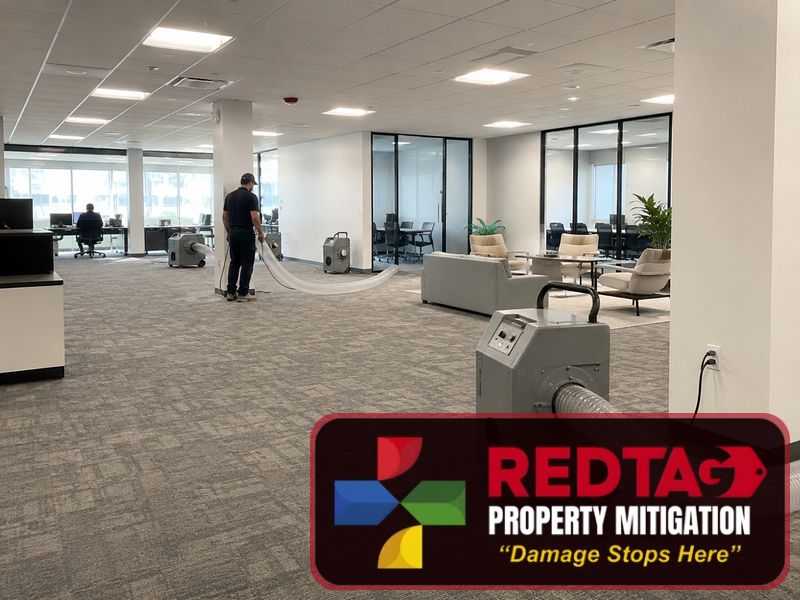
All fire-affected areas are assessed for smoke odor intensity and material type before treatment begins. Assessment identifies which zones require thermal fogging, which require ozone or hydroxyl supplemental treatment, and whether HVAC odor treatment is needed. Treatment planning ensures the correct methods are applied to each zone throughout the property.
Before thermal fogging, the structure is sealed to retain the fog inside the affected zones. Windows, doors, and ventilation openings are closed. HVAC systems are assessed to determine whether they will be included in the fogging application or treated separately. All personnel clear the space before fogging equipment is operated throughout the property.
Thermal fogging equipment is operated throughout the sealed space, dispersing deodorising fog into all accessible areas including wall cavities, ceiling spaces, and enclosed zones. The fog dwells inside the structure for a defined period to penetrate porous materials and reach embedded odor compounds throughout all fire-affected areas of the building.
After fogging, supplemental ozone or hydroxyl treatment is applied where residual odor remains in specific zones or materials. HVAC surfaces and ductwork are treated to address odor compounds that entered the ventilation system. Air scrubbers with activated carbon filters may be deployed to capture residual airborne odor compounds throughout the space.
Odor levels are assessed after treatment to confirm acceptable results across all zones. Completed treatment areas are photographed and recorded in the project file. The odor control documentation forms part of the insurance claim file compiled throughout the mitigation project and is handed off alongside soot cleaning and material removal records.
Odor control and thermal fogging in Modesto follows a defined sequence from odor assessment through space preparation, fogging application, supplemental air treatment, and documentation. Most projects move through these phases across all fire-affected areas of the property.
This sequence ensures odor control is completed in the correct order throughout Modesto. Contact RedTag Property Mitigation at 888-RED-1-TAG for information about odor control response and project availability.
Odor control and thermal fogging addresses smoke odor at depth, reduces the risk of persistent post-reconstruction odor, protects the HVAC system, and produces treatment documentation that supports the insurance claim for property owners and managers throughout Modesto.
Thermal fogging reaches odor compounds embedded inside porous materials that surface cleaning cannot address. The deodorising agent penetrates the same building materials smoke did during the fire, treating odor at the source rather than masking it at the surface level throughout all fire-affected areas of the property.
Smoke odor not treated before reconstruction is sealed inside rebuilt wall and ceiling assemblies. Effective odor control before reconstruction reduces the risk of persistent odor remaining inside the completed structure after occupancy, which would otherwise require reopening finished spaces to treat the odor source.
Treating HVAC surfaces and ductwork during the odor control phase prevents smoke odor from recirculating through the ventilation system after reconstruction and recommissioning. An untreated HVAC system can spread residual odor throughout the building whenever the system operates after repairs are complete throughout the property.
Treatment methods used, zones treated, dwell times, and completion photographs are recorded as part of the insurance claim file. This documentation supports adjuster review and provides the reconstruction contractor with a record of odor control work completed before rebuilt materials are installed throughout the mitigation project.
Completed odor control treatment prepares the structure for thepre-reconstruction preparation and debris management phase. With soot cleaned and odor addressed, the building is ready for final substrate cleaning, debris removal, and handoff to the reconstruction contractor throughout all fire-affected zones.
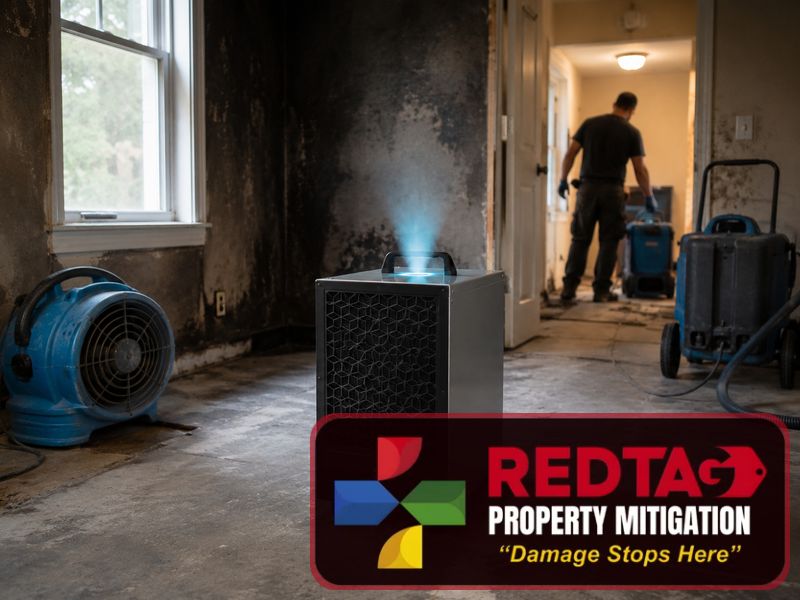
These outcomes make odor control and thermal fogging a required step before reconstruction in Modesto. Contact RedTag Property Mitigation to discuss treatment scope for a specific fire loss situation.
RedTag Property Mitigation handles odor control and thermal fogging throughout Modesto from coordinates 37.6391 N, 120.9969 W in California. Service coverage extends across the Central Valley metropolitan area and surrounding suburbs.
Coverage in Central Modesto includes commercial and residential properties across Downtown Modesto, Sylvan, Beyer Park, the College Area, Lakewood, Creekwood, Village One, and the Airport District throughout the central zone of the city.
Sub-areas covered:Downtown Modesto, Sylvan, Beyer Park, College Area, Lakewood, Creekwood, Village One, Airport District.
Coverage extends north into Salida, Riverdale Park, Ceres, Turlock, Denair, Keyes, and Hughson. Commercial buildings, multifamily properties, and residential structures along the Highway 99 corridor through Stanislaus County are included in this coverage zone.
Sub-areas covered:Salida, Riverdale Park, Ceres, Turlock, Denair, Keyes, Hughson.
Stockton and Tracy are covered as secondary service cities. Coverage extends across North Stockton, Lincoln Village, Sherwood Manor, Mountain House, Lathrop, and Manteca for commercial and residential fire loss situations throughout the corridor.
Sub-areas covered:North Stockton, Lincoln Village, Sherwood Manor, Mountain House, Lathrop, Manteca.
Coverage extends along the Highway 99 corridor into Merced, Atwater, Livingston, Madera, Clovis, and Fresno. Service requests from commercial property owners and managers in these communities are handled throughout the Central Valley service area.
Sub-areas covered:Merced, Atwater, Livingston, Madera, Clovis, Fresno.
Select Bay Area locations including Hayward, Livermore, and Pleasanton are covered for commercial projects. Patterson, Newman, and Los Banos in the broader Central Valley are also served within the wider service coverage region.
Sub-areas covered:Hayward, Livermore, Pleasanton, Patterson, Newman, Los Banos.
Contact RedTag Property Mitigation to confirm odor control and thermal fogging availability in specific Modesto locations. Coverage information is available for all suburbs listed throughout the Central Valley.
These questions address common concerns about odor control and thermal fogging in Modesto. Answers provide practical information about how treatment works, which methods are used, when treatment happens, and what to expect throughout the process.
A thermal fogging machine heats a deodorising solution into dense vapor that is introduced into the space. The vapor penetrates porous materials including framing, drywall, and insulation. The deodorising agent neutralises odor compounds embedded inside these materials at the source rather than masking surface odor throughout the structure.
Thermal fogging is applied after smoke and soot cleaning of all structural surfaces is complete. Applying fogging before soot removal is less effective because soot deposits on surfaces limit the penetration of the deodorising agent into porous materials throughout the affected areas of the property.
Thermal fogging uses a heated deodorising agent that penetrates porous materials to neutralise embedded odor compounds. Ozone treatment generates ozone gas that oxidises odor compounds in air and on surfaces. Both methods are applied based on odor intensity and material type. Ozone requires the space to be unoccupied during treatment.
Duration depends on the size of the affected area and the extent of smoke penetration into building materials. Thermal fogging of a single commercial floor may take one day. Properties with deep smoke penetration across multiple zones may require two to three days of combined treatment methods.
Odor control is generally covered under commercial property insurance policies as part of fire mitigation following a covered fire event. Documentation of treatment methods and completed zones supports the insurance claim and adjuster review process throughout the project.
The degree of odor elimination depends on fire size, burn duration, and how deeply smoke penetrated building materials. Thermal fogging, supplemental air treatment, and encapsulation of structural materials typically achieve significant odor reduction. Deep penetration into structural assemblies may require encapsulant sealers on specific surfaces.
HVAC treatment is included when assessment confirms smoke has entered the ventilation system. Not all fire events result in smoke reaching the ductwork. Assessment of the HVAC system determines whether treatment is required before the scope of odor control work is confirmed for the property.
Encapsulation involves applying a sealant to structural materials where odor compounds are too deeply embedded for fogging or air treatment to neutralise. It is used selectively on materials that cannot be removed and where other methods have not achieved complete odor neutralisation throughout the affected areas.
The property must be unoccupied during thermal fogging application and for a defined clearance period after treatment. Ozone treatment also requires full evacuation. Hydroxyl treatment can be applied in occupied or partially occupied spaces and does not require full clearance during the treatment process.
Treatment methods applied, zones treated, dwell times, and clearance check results are recorded and photographed throughout the odor control phase. This documentation is compiled into the insurance claim file alongside soot cleaning and material removal records for adjuster review and reconstruction contractor reference.
Contact RedTag Property Mitigation for additional questions about odor control and thermal fogging in Modesto. The team can provide information about treatment methods, scope, timing, and availability throughout the Central Valley.
RedTag Property Mitigation handles odor control and thermal fogging requests throughout Modesto and the surrounding Central Valley. Service coverage includes all areas listed above. Call888-RED-1-TAG for 24/7 emergency dispatch.
Contact RedTag Property Mitigation for information about odor control and thermal fogging in Modesto. Questions about treatment methods, service scope, insurance documentation, and coverage area can be answered. Service requests are accepted throughout all listed coverage areas.
Quick Find: All Services
Emergency Water Extraction · Structural Drying · Moisture Mapping & Thermal Imaging · Flood Cuts & Drywall Removal · Antimicrobial Treatment · Water Damage Insurance Documentation · Emergency Board Up · Fire Damaged Material Removal · Smoke & Soot Cleaning · Odor Control & Thermal Fogging · Structural Stabilization · Pre Reconstruction Preparation · Mold Containment Barriers · Negative Air Pressure Systems · HEPA Air Scrubbing · Mold Affected Material Removal · Post Remediation Clearance · Emergency Roof Tarping · Storm Board Up · Temporary Shoring · Emergency Debris Removal · Property Loss Prevention · Contents Pack Out · Digital Inventory & Documentation · Secure Contents Storage · Biohazard Containment · Trauma Scene Disinfection · Biohazard Documentation · Storm Debris Removal · Fire Debris Removal · Construction Debris Removal · Renovation Debris Removal · Residential Junk Removal · Emergency 24/7 Junk Removal · Commercial Junk Removal · Property Management Junk Removal · Post Mitigation Debris Hauling · Outdoor & Yard Debris Removal