
Tarps installed over storm-damaged roof sections to stop weather intrusion and limit secondary water damage while permanent repairs are arranged.
Emergency roof tarping addresses commercial and residential properties where storm, wind, or impact damage has left a roof section open to weather intrusion. RedTag Property Mitigation handles emergency roof tarping throughout Modesto, CA and the surrounding Central Valley. When a roof is breached by a falling tree, wind-driven debris, hail impact, or structural failure, rain can enter the building within hours of the initial event. Tarps are installed over damaged roof sections to stop active intrusion and limit secondary water damage inside the structure while permanent roof repair is being arranged. Call(209) 424-8233 for 24/7 emergency response throughout Modesto.
Let’s get your project quote started.

Roof damage assessment is completed before any tarp is installed to identify the extent of visible damage, confirm safe access conditions, and determine the tarp size and materials needed. Unstable roof sections, loose debris, and structural concerns are identified before crew members access the roof. The assessment informs the tarp layout and the number of fastening points required to secure the installation against wind loading on the specific property.
Fallen branches, displaced roofing materials, broken sheathing, and loose tiles or shingles around the damaged area are cleared before the tarp is laid. Debris left under the tarp creates pressure points that can cause tearing or prevent a flat seal against the roof surface. Clearing the immediate area also allows the tarp edge to overlap onto intact roofing material, which improves the weather seal at the perimeter of the installation.
The tarp is sized to extend beyond the visible damage perimeter on all sides. Coverage past the edge of damaged material accounts for hidden penetrations at seams and reduces the risk of water tracking under the tarp edge during rain events. Tarp dimensions are selected based on the damage area, roof pitch, and the available overlap onto undamaged sections of the roof surface.
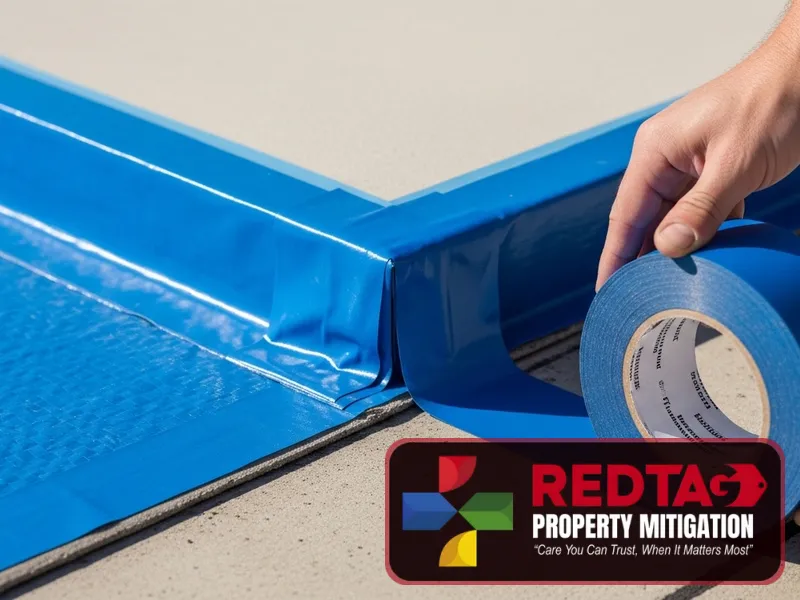
The tarp is secured using battens, screws, or rope lashing attached to the roof structure. Fastening method depends on roof type, pitch, and wind exposure at the property. The tarp is pulled taut before fasteners are set to reduce movement in wind. On flat or low-pitched commercial roofs, weight bags or ballast may supplement mechanical fasteners to maintain even tension across the full tarp surface.

Tarp edges are folded and secured to reduce the risk of wind getting under the perimeter and lifting the installation. On sloped roofs the upper edge is tucked under intact shingles or fixed to the ridge to prevent water from entering behind the tarp. The perimeter treatment is the most critical part of the installation since most tarp failures originate at edge penetrations rather than through the tarp body.
After the tarp is installed, the interior space directly below the damaged roof section is checked for signs of ongoing water intrusion. This confirms the tarp is providing an effective seal and identifies any additional penetration points that may not have been visible from the roof. If active dripping or water tracking is found, the tarp position or edge coverage is adjusted before the inspection is complete.
The roof section is photographed before the tarp is installed to document the extent of storm damage, and after installation to record tarp coverage and fastening. These photographs are included in the project record provided to the property owner and insurance carrier. Documentation of pre-tarp conditions supports the insurance claim by establishing the damage state at the time of the initial emergency response.
Emergency roof tarping is a temporary protective measure. Once the tarp is installed, the next step is contacting the insurance carrier to begin the claim process and arranging a permanent roofing contractor to assess and repair the damaged section. RedTag Property Mitigation provides the tarp installation documentation to support that process. Information about the full storm and emergency mitigation service scope in Modesto is available on thestorm and emergency mitigation service page.
Contact RedTag Property Mitigation for information about emergency roof tarping in Modesto. The scope for a specific damaged roof situation can be discussed.
Emergency roof tarping in Modesto covers the key steps involved in assessing, securing, and protecting a damaged roof section after a storm or impact event.
Roof damage after a storm requires a fast, measured response. The tarp must be sized correctly, secured against wind loads, and extended beyond the visible damage perimeter to prevent intrusion at edges and seams during subsequent weather events.
Storm damage does not follow business hours. Emergency roof tarping dispatch is available around the clock for commercial and residential properties throughout Modesto and the Central Valley. Call(209) 424-8233 for immediate response to a storm-damaged property.
A tarp that only covers the visible hole provides incomplete protection. Water tracks along roof sheathing, underlayment, and framing members before it becomes visible inside. Tarp coverage is extended beyond the apparent damage perimeter on all sides to account for hidden penetration paths that are not visible from the roof surface.
An unsecured or loosely fastened tarp can be displaced in wind within hours of installation, leaving the roof open again before permanent repairs are made. Battens, screws, and perimeter fastening are applied based on roof type and wind exposure at each specific property to keep the tarp in place between the emergency response and the permanent repair visit.
Pre-tarp and post-tarp photographs, installation scope, and material records are compiled at the time of each job. This documentation establishes the condition of the roof at the time of emergency response and records the protective work performed. Insurance adjusters require this information when reviewing the initial property loss and authorizing repair work.
Commercial roofs involve larger spans, different materials, and higher wind exposure than residential roofs. Flat membrane roofs, standing seam metal, built-up roofing, and tile systems each require different tarp securing methods. Emergency roof tarping capability covers both commercial and residential roof types across the Modesto service area. For properties also requiring board-up or structural shoring, seestorm board-up andtemporary shoring and structural stabilization services.

Contact RedTag Property Mitigation at(209) 424-8233 to discuss emergency roof tarping for a specific commercial or residential property in Modesto or the surrounding Central Valley service area.

A service request is submitted by phone. Property type, roof type, and visible damage are described. Dispatch is confirmed based on location and current schedule. RedTag Property Mitigation accepts emergency roof tarping requests throughout Modesto and the Central Valley service area at any hour.
On arrival the crew assesses the damaged roof section, confirms safe access conditions, and identifies the tarp size and securing method needed. Structural instability, loose debris, and access hazards are identified before anyone steps onto the roof surface. The property owner is briefed on what was found.
Loose debris around the damaged section is cleared. The tarp is laid over the damage area with edges extending past the perimeter of visible damage on all sides. Tarp position is adjusted to confirm coverage before fastening begins. Positioning determines how effective the seal will be during rain events.
Battens, screws, or rope lashing are used to fix the tarp to the roof structure based on roof type and wind exposure. The upper edge is secured under intact roofing material or tied off at the ridge where the roof pitch allows. Edges are folded and fixed to reduce the risk of wind penetration at the perimeter.
The interior below the damaged area is checked to confirm the tarp is providing an effective seal. Pre-tarp and post-tarp photographs are taken and compiled into the project record. The documentation package is provided to the property owner and is available for the insurance carrier upon request.
Emergency roof tarping in Modesto follows a defined sequence from initial contact and site safety assessment through tarp installation, securing, and documentation handoff.
Contact RedTag Property Mitigation at(209) 424-8233 for information about emergency roof tarping for a commercial or residential property in Modesto or the Central Valley.
Emergency roof tarping limits secondary water intrusion into a storm-damaged structure, protects interior contents and building systems from ongoing rain exposure, and produces documentation that supports the insurance claim from the date of first response in Modesto.
A correctly installed tarp over a breached roof section stops rain from entering the structure during subsequent weather events. Interior water damage from an unprotected roof opening accumulates with each rain event until permanent repairs are completed. Tarping limits this ongoing accumulation from the day of the emergency response.
Rain entering through a roof breach saturates insulation, ceiling assemblies, wall cavities, flooring, and building contents. Extended exposure can lead to structural deterioration and mold growth inside the wall and ceiling systems. A tarp installation reduces ongoing saturation and limits the scope of interior mitigation and reconstruction work required.
Secondary water damage that accumulates after a roof breach adds to the overall cost of the insurance claim. Every additional rain event that enters an unprotected opening increases the scope of interior drying, material removal, and reconstruction. Emergency tarping limits this accumulation and keeps the scope of secondary damage as small as possible.
Pre-tarp photographs document the roof condition at the time of the storm event, before any repair work begins. This record is the baseline for the insurance claim. It establishes what damage occurred in the storm and what was present before any contractors accessed the property, supporting the claim through the adjustment process.
Permanent roofing repairs cannot always begin immediately after a storm. Contractor availability, insurance authorization, and material lead times can delay permanent work by days or weeks. Emergency tarping protects the property during that gap. For ongoing property protection after the initial tarp is in place, seeproperty loss prevention and stabilization services in Modesto.
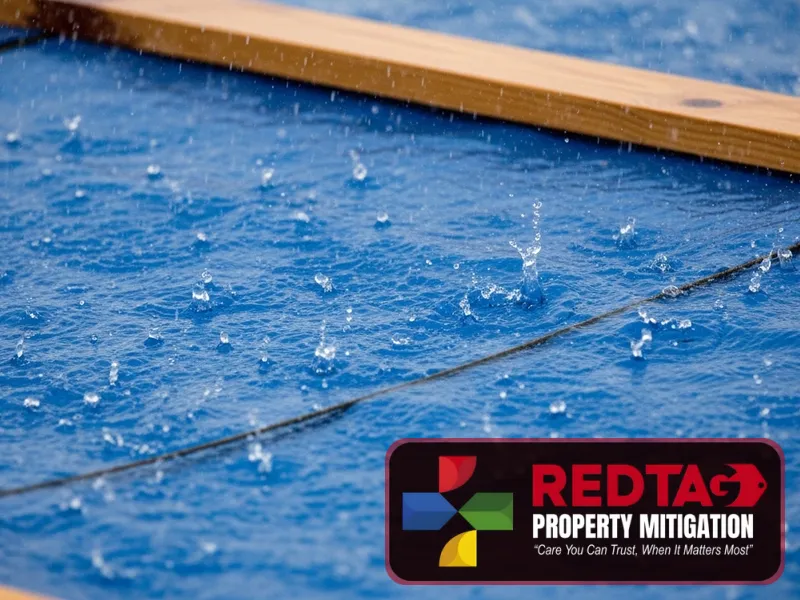
These outcomes make emergency roof tarping a practical first step in protecting a storm-damaged property in Modesto. Contact RedTag Property Mitigation to discuss how this service applies to a specific roof damage situation at a commercial or residential property.
RedTag Property Mitigation handles emergency roof tarping throughout Modesto from coordinates 37.6391 N, 120.9969 W in California. Service coverage extends across the Central Valley metropolitan area and surrounding suburbs for commercial and residential storm situations.
Emergency roof tarping in Central Modesto covers commercial and residential properties across Downtown Modesto, Sylvan, Beyer Park, the College Area, Lakewood, Creekwood, Village One, and the Airport District throughout the central zone of the city.
Sub-areas covered: Downtown Modesto, Sylvan, Beyer Park, College Area, Lakewood, Creekwood, Village One, Airport District.
Coverage extends north into Salida, Riverdale Park, Ceres, Turlock, Denair, Keyes, and Hughson. This zone includes residential subdivisions, multifamily properties, and commercial buildings along the Highway 99 corridor through Stanislaus County north and south of Modesto.
Sub-areas covered: Salida, Riverdale Park, Ceres, Turlock, Denair, Keyes, Hughson.
Stockton and Tracy are covered as secondary service cities for emergency roof tarping. Coverage includes North Stockton, Lincoln Village, Sherwood Manor, Mountain House, Lathrop, and Manteca for commercial and residential storm losses throughout the corridor between Modesto and Stockton.
Sub-areas covered: North Stockton, Lincoln Village, Sherwood Manor, Mountain House, Lathrop, Manteca.
Coverage extends along the Highway 99 corridor into Merced, Atwater, Livingston, Madera, Clovis, and Fresno. Emergency roof tarping requests from property managers and building owners in these communities are handled throughout the Central Valley service area.
Sub-areas covered: Merced, Atwater, Livingston, Madera, Clovis, Fresno.
Select Bay Area locations including Hayward, Livermore, and Pleasanton are covered for commercial emergency roof tarping projects. Patterson, Newman, and Los Banos in the broader Central Valley are also served within the wider service region.
Sub-areas covered: Hayward, Livermore, Pleasanton, Patterson, Newman, Los Banos.
Contact RedTag Property Mitigation to confirm emergency roof tarping availability in specific Modesto locations. Coverage information is available for all suburbs and surrounding communities listed throughout the full Central Valley service area.
These questions address the most common points raised about emergency roof tarping at commercial and residential properties throughout Modesto and the Central Valley.
Storm damage that leaves a roof section open to weather intrusion typically requires tarping. Common situations include branches or trees through the roof, sections of shingles or tiles stripped by wind, hail damage to skylights or roof penetrations, and structural failure that creates an opening in the roof assembly.
RedTag Property Mitigation prioritizes same-day response for emergency roof tarping requests in Modesto when dispatch allows. Arrival time is confirmed at the time of the initial call to(209) 424-8233 based on current schedule and the property location within the service area.
The tarp covers the damaged section and extends beyond the visible damage perimeter on all sides. Full roof coverage is not typically needed unless the damage is widespread. Coverage is sized to provide an effective weather seal while keeping the installation manageable and appropriately secured for the specific roof type.

Battens and screws are used to fix the tarp through its edges into the roof structure. On sloped roofs the upper edge is tucked under intact shingles or fixed to the ridge. On flat roofs weight bags or ballast may supplement mechanical fasteners. Fastening method depends on the roof type and expected wind conditions.
A correctly installed tarp can remain in place for several weeks while permanent repairs are arranged. Tarps deteriorate with UV exposure and wind movement over time. Regular checks are recommended to confirm the tarp remains secured and intact, particularly before and after additional rain or wind events in the area.
Storm damage from covered events such as wind, hail, or falling trees is typically covered under commercial property policies. Emergency tarping is generally authorized as a necessary step to prevent further loss. The documentation produced during the tarp installation supports the insurance claim review process.

Contact RedTag Property Mitigation for additional questions about emergency roof tarping for commercial and residential properties in Modesto and the surrounding Central Valley.
RedTag Property Mitigation handles emergency roof tarping throughout Modesto and the surrounding Central Valley. Call(209) 424-8233 for 24/7 emergency dispatch.
Contact RedTag Property Mitigation for information about emergency roof tarping in Modesto. Questions about service scope, tarp coverage, and insurance documentation can be answered.