
Controlled removal of mold-affected drywall, insulation, and building materials at commercial properties in Modesto per IICRC S520 standards.
Mold affected material removal addresses building materials that have been colonized by mold and cannot be cleaned to an acceptable standard. Drywall, insulation, wood substrate materials, and other porous building components showing active mold growth are removed in a controlled sequence inside a properly established containment zone. Removal takes place with HEPA air scrubbers running and negative air pressure maintained throughout, following IICRC S520 standards for spore containment during demolition. RedTag Property Mitigation carries out mold affected material removal at commercial and residential properties throughout Modesto, CA and the Central Valley under CSLB license number 1130391. Request a quote by filling in our online form for the fastest response.
Let’s get your project quote started.

Before removal begins, each material inside the affected area is assessed to determine whether it can be cleaned in place or must be removed. Porous materials including drywall and insulation that have visible mold growth or have been saturated with moisture for an extended period are typically unsalvageable and scheduled for removal. Non-porous surfaces such as concrete, metal framing, and ceramic tile can often be cleaned in place if mold growth is limited to the surface layer. The scope of removal is documented before demolition begins.
Drywall is the most commonly removed material in mold remediation projects. Gypsum board absorbs moisture readily, and mold grows on both the paper facing and within the gypsum core when conditions allow. Affected drywall is removed in controlled sections. The cut line is typically set above the visible mold boundary to account for growth that may not yet be visible at the edges. Removed drywall is double-bagged in poly bags inside the containment zone before being moved through the waste exit path.
Fibrous insulation materials including fiberglass batts and blown-in cellulose are removed when water intrusion has saturated them or when mold growth is present on the facing or within the material. Insulation does not dry effectively once it has been wet for more than a short period, and mold growth inside the batt cannot be treated by surface cleaning. Affected insulation is bagged and sealed inside the containment zone using poly bags and moved through the designated waste exit path.
Wood framing and structural substrate materials require case-by-case assessment during mold affected material removal. Surface mold growth on framing members that are otherwise structurally sound can often be addressed through mechanical cleaning and antimicrobial treatment rather than removal. Framing members with deep mold penetration, rot, or structural compromise may require removal and replacement. The decision is made based on visible mold depth, moisture content readings, and whether the material can realistically be cleaned to an acceptable level in place.

Material removal follows a controlled sequence inside the containment zone.HEPA air scrubbing and filtration equipment runs throughout demolition to capture airborne spores released during cutting and removal.Negative air pressure systems maintain directional airflow throughout the work. Removal proceeds from the least-contaminated areas toward the most heavily affected sections to limit the spread of disturbed spores across the work zone during the demolition phase of the project.
All removed mold-affected materials are double-bagged in heavy-gauge poly bags and sealed with tape inside the containment zone before being moved toward the waste exit path. Bags are not carried through the main building if an alternative exit path can be established. A dedicated waste exit may be created through a window or exterior door to avoid transporting contaminated materials through clean areas of the building. All waste is labelled and disposed of in accordance with applicable regulatory requirements.
After mold-affected materials are removed, the exposed structural surfaces including framing, subfloors, and any remaining structural assemblies are cleaned. HEPA vacuuming removes loose mold and debris from all exposed surfaces. Mechanical cleaning methods address mold growth on wood framing members where surface colonization can be removed without structural damage. Antimicrobial treatment is applied to cleaned substrates. This phase prepares the structure forpost-remediation clearance preparation and third-party clearance testing.
Every stage of the material removal process is documented with photographs and written records. Documentation includes pre-removal assessment photographs showing mold growth on affected materials, during-removal photographs showing the removal sequence and waste handling, and post-removal photographs showing the exposed structural surfaces before cleaning. Material types, quantities removed, disposal methods, and waste exit procedures are recorded. This documentation forms part of the overall project file submitted to the insurance carrier and made available to the clearance inspector.
Contact RedTag Property Mitigation for information about mold affected material removal in Modesto. The scope of removal for a specific property can be discussed.
Mold affected material removal in Modesto covers several components of the demolition and disposal process, each following a defined sequence within an active containment zone.
Material removal is the most disruptive phase ofmold mitigation support in Modesto. How it is carried out inside containment determines whether spore spread is controlled or whether the scope of the project expands.
Mold affected material removal follows IICRC S520 standards for the sequence of demolition, waste handling, and disposal inside containment. S520 defines how materials are assessed, how they are removed, how waste is handled, and what documentation is required throughout the removal phase of remediation.
Material removal withHEPA air scrubbers running andnegative air pressure maintained throughout limits the spread of spores disturbed during demolition. A controlled removal sequence that moves from less-affected to more-affected areas further reduces cross-contamination risk across the work zone during the project.
Every material in the affected area is assessed before demolition starts. This assessment is completed aftermold containment barriers and engineering controls are confirmed active. Clear scope determination avoids over-removal of salvageable materials and keeps the project within the documented scope for insurance review.
Pre-removal, during-removal, and post-removal photographs are taken at each stage of the demolition process. Waste handling methods and disposal records are documented throughout. This photographic and written record supports the insurance claim, satisfies clearance inspector requirements, and demonstrates that removal was carried out per IICRC S520 procedures.
When mold is discovered in an occupied commercial property, rapid containment and removal response limits ongoing exposure and disruption to building operations. Material removal response is available around the clock for commercial and residential properties in Modesto. Call888-RED-1-TAG for emergency dispatch.

Request a quote by filling in our online form for the fastest response, or to discuss mold affected material removal scope and process for a specific commercial or residential property in Modesto or the Central Valley.

Before demolition begins, each material in the affected area is assessed and the removal scope is confirmed. Moisture readings are taken on suspect materials. Photographs document the condition of materials prior to removal. The waste exit path is identified and the containment zone is confirmed as operational.
Prior to beginning demolition,HEPA air scrubbers are confirmed running andnegative air pressure is verified inside the containment zone. Pressure differential is checked. No demolition begins until both engineering controls are confirmed operational. This step ensures spore release during cutting and removal is managed from the first moment of work.
Material removal proceeds in the sequence determined during assessment, moving from the least-affected sections toward the most heavily colonized areas. Drywall is cut at the established boundary lines and removed in manageable sections. Insulation is removed carefully to avoid releasing trapped spores into the air beyond the containment boundaries.
All removed materials are double-bagged in heavy-gauge poly bags and sealed immediately inside the containment zone. Bags are moved through the designated waste exit path. Waste is transported and disposed of in compliance with applicable regulations. All disposal is documented with waste type, quantity, and disposal method for the project record.
Exposed structural surfaces are HEPA vacuumed and mechanically cleaned after all mold-affected materials are removed. Antimicrobial treatment is applied to cleaned substrates. The site is then prepared forpost-remediation clearance preparation and third-party clearance testing by a certified industrial hygienist.
Mold affected material removal in Modesto follows a defined sequence from pre-removal assessment through controlled demolition, waste disposal, and structural surface cleaning.
Request a quote by filling in our online form for the fastest response, or for information about mold affected material removal for commercial and residential properties throughout Modesto.
Mold affected material removal eliminates the primary source of mold growth from the building, prepares structural surfaces for cleaning and treatment, and produces the documented evidence required for insurance review and post-remediation clearance testing in Modesto.
Mold-colonized drywall, insulation, and other unsalvageable materials are the primary mold source inside the affected area. Removing them eliminates the food source and growth substrate. Surface cleaning and antimicrobial treatment applied after removal address residual mold on structural surfaces that can be retained and treated.
Removing affected drywall and insulation exposes the framing, subfloor, and structural assemblies behind them. These surfaces can then be HEPA vacuumed, mechanically cleaned, and treated with antimicrobial products. Structural surfaces that are cleaned and documented are included in the post-remediation clearance inspection and testing process.
Carrying out removal inside an active containment zone with HEPA filtration running and negative air pressure maintained limits the spread of spores disturbed during demolition. Controlled demolition sequence and proper waste handling prevent cross-contamination to adjacent areas throughout the removal phase of the project.
Pre-removal, during-removal, and post-removal photographs and written records document the full scope of materials removed. This record supports the insurance claim by providing a clear account of what was removed, why it was removed, and how waste was handled per IICRC S520 disposal procedures.
Completing material removal and structural surface cleaning prepares the site for post-remediation clearance testing. A site where all mold-affected materials have been removed and exposed surfaces have been cleaned and treated is in the condition required for a certified industrial hygienist to conduct valid clearance testing.
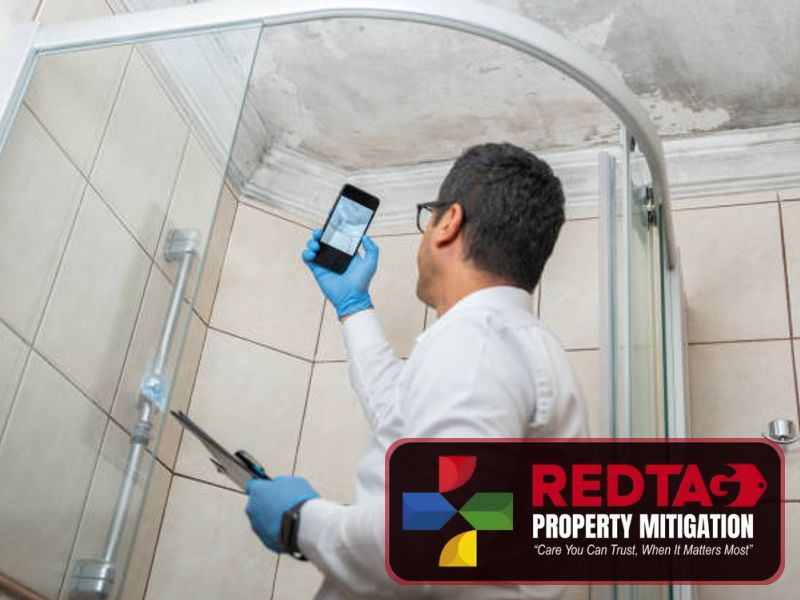
These outcomes make mold affected material removal a central phase of any mold remediation project in Modesto. Contact RedTag Property Mitigation to discuss removal scope and process for a specific commercial or residential mold situation.
RedTag Property Mitigation carries out mold affected material removal throughout Modesto from coordinates 37.6391 N, 120.9969 W in California. Service coverage extends across the Central Valley metropolitan area and surrounding suburbs for commercial and residential mold situations.

Mold affected material removal in Central Modesto covers commercial and residential properties across Downtown Modesto, Sylvan, Beyer Park, the College Area, Lakewood, Creekwood, Village One, and the Airport District throughout the central zone of the city.
Sub-areas covered: Downtown Modesto, Sylvan, Beyer Park, College Area, Lakewood, Creekwood, Village One, Airport District.
North Modesto and surrounding communities are covered for all mitigation service types. This zone includes Ceres and Turlock and extends into smaller communities along the Highway 99 corridor through Stanislaus County.
Sub-areas covered: Salida, Riverdale Park, Ceres, Turlock, Denair, Keyes, Hughson
Stockton and Tracy are covered as secondary service cities for mold affected material removal. Coverage includes North Stockton, Lincoln Village, Sherwood Manor, Mountain House, Lathrop, and Manteca for commercial mold situations throughout the corridor between Modesto and Stockton.
Sub-areas covered: North Stockton, Lincoln Village, Sherwood Manor, Mountain House, Lathrop, Manteca.
Coverage extends along the Highway 99 corridor into Merced, Atwater, Livingston, Madera, Clovis, and Fresno. Mold affected material removal requests from property managers and building owners in these communities are handled throughout the Central Valley service area.
Sub-areas covered: Merced, Atwater, Livingston, Madera, Clovis, Fresno.
Select Bay Area locations including Hayward, Livermore, and Pleasanton are covered for commercial mold affected material removal projects. Patterson, Newman, and Los Banos in the broader Central Valley are also served within the wider service region.
Sub-areas covered: Hayward, Livermore, Pleasanton, Patterson, Newman, Los Banos.
Contact RedTag Property Mitigation to confirm mold affected material removal availability in specific Modesto locations. Coverage information is available for all suburbs listed throughout the Central Valley service area.
These questions cover the most common points raised about mold affected material removal at commercial and residential properties throughout Modesto and the Central Valley.
Porous materials with visible mold growth or extended moisture saturation are assessed for removal. Materials that can realistically be cleaned and treated to an acceptable level in place are retained. Moisture readings, visual inspection, and material type all factor into the removal decision made before demolition begins.
Not always. Drywall removal is limited to sections with active mold growth or significant moisture damage. Drywall in adjacent areas that remained dry and shows no mold growth is typically retained. Cut lines are set above the visible mold boundary to ensure all affected material is captured.
Framing members with surface mold growth that are otherwise structurally sound can often be cleaned in place through mechanical cleaning and antimicrobial treatment. Framing with deep mold penetration, rot, or structural damage may require removal. The condition of each member is assessed individually before a decision is made.
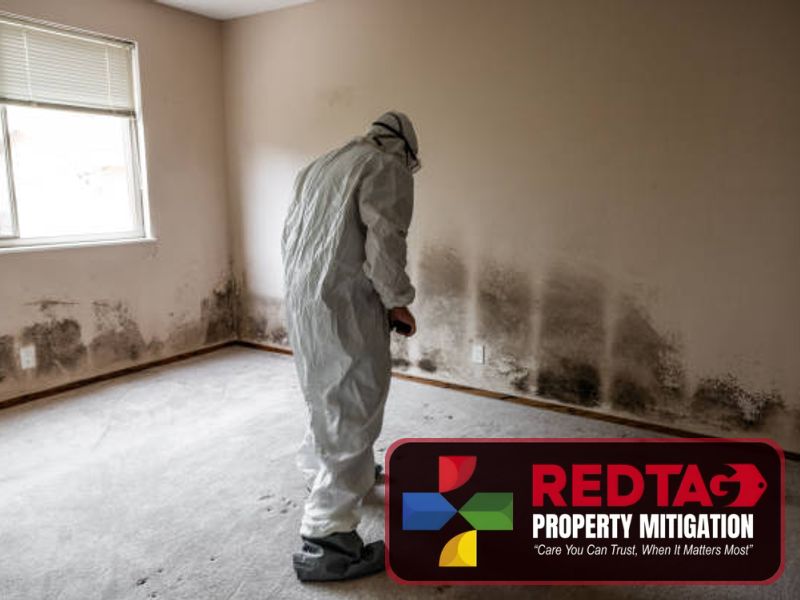
Removed materials are double-bagged in heavy-gauge poly bags, sealed inside the containment zone, and transported through a designated waste exit path. Disposal follows applicable regulations for handling mold-contaminated building materials. All disposal is documented with waste type, quantities, and disposal method for the project record.
Coverage depends on the insurance policy and the underlying cause of the mold. Mold resulting from a covered water event such as a burst pipe is typically included in the claim. Mold from long-term moisture accumulation or deferred maintenance may not be covered under the policy.
Exposed structural surfaces are HEPA vacuumed and cleaned after material removal. Antimicrobial treatment is applied to cleaned framing and substrates. The site then moves intopost-remediation clearance preparation, where the space is readied for third-party clearance testing by a certified industrial hygienist.

Contact RedTag Property Mitigation for additional questions about mold affected material removal in Modesto and the broader Central Valley service area.
RedTag Property Mitigation handles mold affected material removal throughout Modesto and the Central Valley. Request a quote by filling in our online form for the fastest response.
Contact RedTag Property Mitigation for information about mold affected material removal in Modesto. Questions about removal scope, disposal, and insurance documentation can be answered.
Quick Find: All Services
Emergency Water Extraction · Structural Drying · Moisture Mapping & Thermal Imaging · Flood Cuts & Drywall Removal · Antimicrobial Treatment · Water Damage Insurance Documentation · Emergency Board Up · Fire Damaged Material Removal · Smoke & Soot Cleaning · Odor Control & Thermal Fogging · Structural Stabilization · Pre Reconstruction Preparation · Mold Containment Barriers · Negative Air Pressure Systems · HEPA Air Scrubbing · Mold Affected Material Removal · Post Remediation Clearance · Emergency Roof Tarping · Storm Board Up · Temporary Shoring · Emergency Debris Removal · Property Loss Prevention · Contents Pack Out · Digital Inventory & Documentation · Secure Contents Storage · Biohazard Containment · Trauma Scene Disinfection · Biohazard Documentation · Storm Debris Removal · Fire Debris Removal · Construction Debris Removal · Renovation Debris Removal · Residential Junk Removal · Emergency 24/7 Junk Removal · Commercial Junk Removal · Property Management Junk Removal · Post Mitigation Debris Hauling · Outdoor & Yard Debris Removal