
Temporary shoring and structural stabilization for storm-damaged commercial and residential properties in Modesto, preventing further movement or collapse while permanent repairs are arranged.
Temporary shoring and structural stabilization addresses compromised load-bearing elements in commercial and residential properties following storm or impact damage. RedTag Property Mitigation handles temporary shoring and structural stabilization throughout Modesto, CA and the surrounding Central Valley. When storm events displace roof framing, weaken wall connections, or compromise floor systems, temporary support must be installed before mitigation crews can safely access and work inside the affected areas. Shoring transfers loads from damaged members to intact structural elements or temporary supports while permanent repairs are arranged. Call888-RED-1-TAG for 24/7 emergency response throughout Modesto.
Let’s get your project quote started.
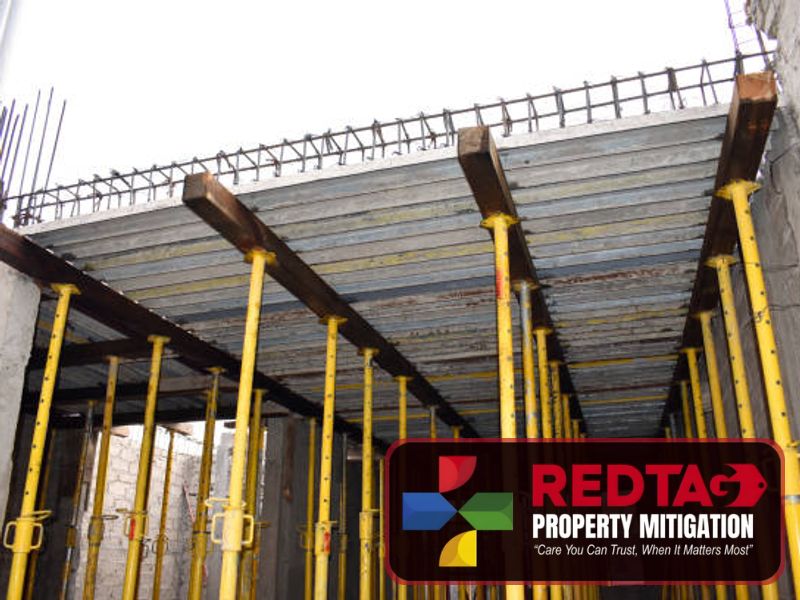
Structural assessment after storm damage identifies all compromised structural elements before any shoring is installed. Roof framing connections, load-bearing wall sections, floor systems, and foundation-to-wall ties are evaluated for displacement or failure. Assessment findings identify where shoring is required, which areas can be safely accessed, and which zones must remain restricted until stabilization work is completed and documented in the project record.
Storm events that displace or partially collapse roof framing create conditions where the remaining roof structure may continue to move or fail under load. Temporary support members are installed beneath damaged roof sections to arrest further movement and transfer the remaining roof load to intact wall structures or temporary vertical supports. This allows work to proceed safely in the interior spaces below without risk of further roof framing displacement during the mitigation phase.
Wind-driven impact, structural uplift, or falling trees can compromise load-bearing wall sections by displacing framing connections, cracking masonry, or removing sections of wall entirely. Temporary shoring alongside damaged wall sections transfers the loads those walls were carrying to adjacent intact structure or temporary steel or timber supports. Wall shoring is sized and positioned based on the span and load conditions identified during the structural assessment of the specific property.
Storm damage to below-grade areas, foundation walls, or crawl space framing can reduce the support available to floor systems above. Temporary posts and beams installed beneath compromised floor sections restore the support required for the floor to safely carry occupancy loads during the mitigation phase. Floor system stabilization is coordinated with the assessment of the structural elements below to confirm the temporary supports are bearing on adequate ground or foundation conditions.
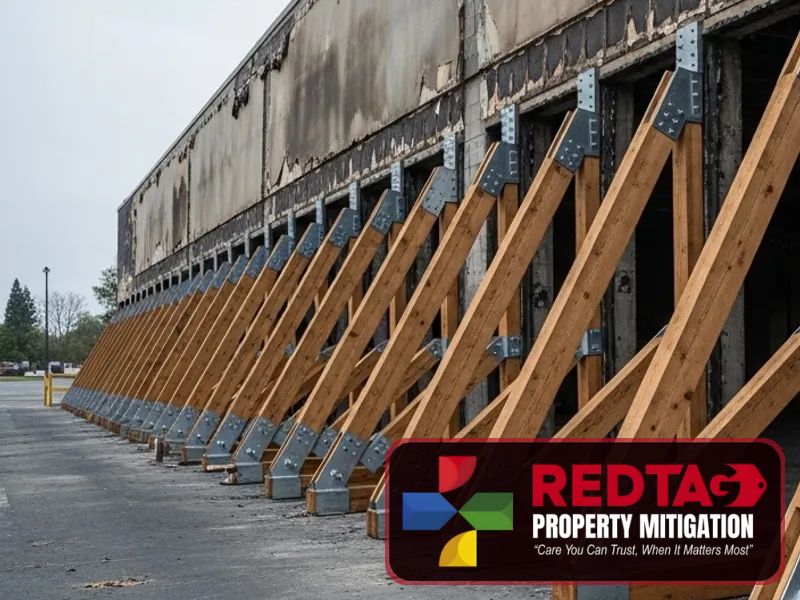
Storm uplift and lateral loading can displace connections between the building structure and the foundation. Anchor bolts, hold-downs, and sill plate connections are checked for displacement or failure at the base of all load-bearing walls in the affected areas. Where connections are found to be compromised, temporary restraint measures are applied to prevent further movement of the wall relative to the foundation during the period before permanent repairs are completed.
Temporary shoring work is accompanied by site hazard identification across all storm-affected areas. Unstable debris piles, compromised floor sections, and restricted zones where collapse risk remains are identified and marked before mitigation crews enter the structure. Access routes are defined and communicated to all crew members. Restricted zones remain in place until shoring is confirmed effective or permanent repairs address the underlying structural condition.
Temporary shoring is monitored throughout the mitigation phase as additional structural elements are exposed during material removal and cleaning work. Conditions that change during mitigation work, such as additional framing damage found during debris removal, are assessed and additional shoring is installed where required. Shoring status is documented in the project record at each stage of the mitigation project to support the insurance claim and reconstruction planning.
Temporary shoring remains in place until permanent structural repairs are completed by the reconstruction contractor. Shoring layout, load conditions, and structural assessment findings are communicated to the permanent repair contractor to support their scope and structural repair planning. Information about the full scope of storm and emergency mitigation services available in Modesto is on thestorm and emergency mitigation service page.
Contact RedTag Property Mitigation for information about temporary shoring and structural stabilization in Modesto. Scope for a specific storm situation can be discussed.
Temporary shoring and structural stabilization in Modesto covers the assessment, support, and safety measures required to secure storm-damaged structural elements before mitigation and repair work proceeds.
Storm-damaged structural elements require assessment before any mitigation work proceeds in the affected areas. The wrong sequence, working in areas where shoring has not been installed, creates risk for crews and can accelerate structural deterioration throughout the property.
No mitigation crew accesses the storm-affected interior until the structural assessment is complete and all compromised elements are identified. Assessment findings define safe access routes, restricted zones, and shoring requirements before any cleaning, removal, or drying work begins anywhere in the building.
Temporary shoring is sized and positioned based on the span, load, and support conditions identified at each specific location during assessment. Undersized or improperly positioned shoring that fails during the mitigation phase can cause further structural damage and create hazardous conditions for crews working in adjacent areas of the building.
Structural assessment findings, shoring installation records, and restricted zone maps are documented throughout the stabilization phase. This documentation supports the insurance claim by recording the structural conditions found after the storm event and the measures applied to make the property safe for mitigation work to proceed.
Shoring condition is checked as additional structural elements are exposed during material removal and cleaning work. If mitigation reveals additional damage not visible during the initial assessment, supplementary shoring is installed before work continues in the newly affected areas. This ongoing monitoring keeps conditions safe throughout the full mitigation project.
Structural assessment records, shoring layout, and load condition notes are compiled and provided to the permanent repair contractor at the end of the mitigation phase. This information supports the reconstruction scope. For the full picture of storm response services, includingemergency roof tarping,storm board-up, andemergency debris removal, see thestorm and emergency mitigation page.
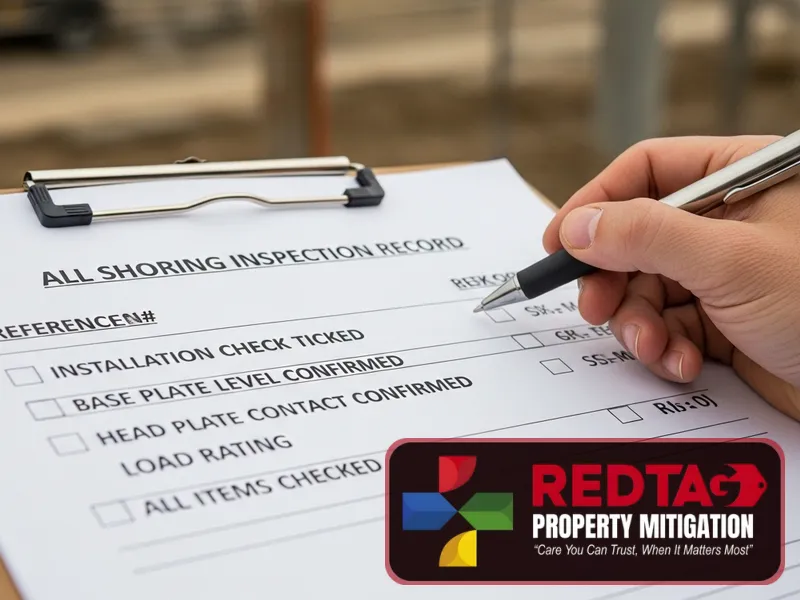
Contact RedTag Property Mitigation at888-RED-1-TAG to discuss temporary shoring and structural stabilization for a commercial or residential property in Modesto or the surrounding Central Valley service area.
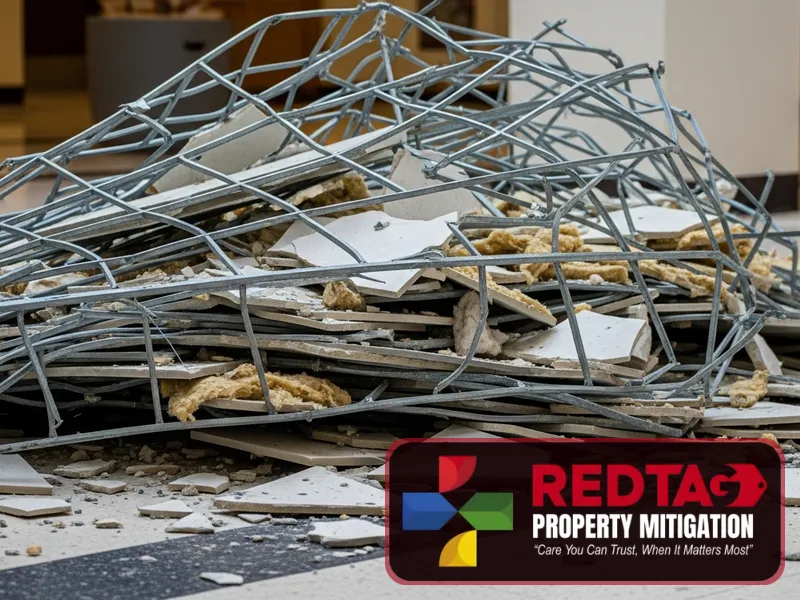
A service request is submitted by phone describing the storm event, property type, and visible structural damage. Dispatch is confirmed based on location and schedule. RedTag Property Mitigation accepts temporary shoring requests throughout Modesto and the Central Valley service area at any hour, including weekends and holidays.
On arrival the storm-affected structure is assessed from the exterior before any interior access is attempted. All visible structural damage is identified and locations of concern are confirmed before crew members enter. The assessment defines which areas require shoring, which can be accessed safely, and which must remain restricted during the stabilization work.
Restricted zones are marked and access routes are defined before shoring installation begins. All crew members are briefed on site conditions, restricted areas, and the order in which zones will be opened as shoring is installed. Hazard control measures remain in place throughout the full duration of the mitigation project.
Temporary shoring members are installed at all locations identified during assessment. Timber or steel supports are positioned and secured to transfer loads from compromised members to intact structure or temporary vertical supports. Each shoring installation is checked before the crew moves to the next location across the property.
Shoring locations, load conditions, and restricted zone maps are compiled into the project record. Areas cleared for safe mitigation crew access are documented and communicated. The documentation package is provided to the property owner and insurance carrier and is available to the reconstruction contractor at the end of the project.
Temporary shoring and structural stabilization in Modesto follows a defined sequence from initial assessment through shoring installation, zone control, and documentation handoff to the reconstruction contractor.
Contact RedTag Property Mitigation at888-RED-1-TAG for information about temporary shoring and structural stabilization for a property in Modesto or the Central Valley.
Temporary shoring and structural stabilization establishes safe site conditions for mitigation crews, prevents further structural movement or collapse during the mitigation phase, and produces documentation that supports the insurance claim and reconstruction scope for properties throughout Modesto.
Mitigation cleaning and material removal work requires crew access to areas adjacent to storm-damaged structural elements. Without shoring, these areas cannot be safely accessed. Temporary shoring installs the support needed to allow mitigation work to proceed in the correct sequence without exposing crews to structural movement risk.
Storm-damaged structural elements left unsupported can continue to move, settle, or fail under the loads they are still carrying. Shoring arrests this movement from the time of installation and prevents additional structural damage from accumulating during the period between the storm event and the start of permanent repairs.
Structural elements that deteriorate further between the storm event and the start of permanent repairs increase the total cost of reconstruction. Shoring that prevents further movement keeps the structural damage contained to what occurred during the initial storm event, reducing the amount of additional repair work needed during the reconstruction phase.
Structural assessment findings, shoring records, and restricted zone documentation establish the structural condition of the property at the time of emergency response. This record supports the insurance claim by providing evidence of storm-caused structural damage and the measures applied before mitigation crews began working in the affected areas.
The structural assessment and shoring documentation compiled during the mitigation phase gives the reconstruction contractor detailed information about structural conditions before they begin permanent repairs. For properties also requiring ongoing site protection, seeproperty loss prevention and stabilization services in Modesto.
These outcomes make temporary shoring and structural stabilization a necessary step before mitigation work proceeds on storm-damaged properties in Modesto. Contact RedTag Property Mitigation to discuss how this service applies to a specific structural situation.
RedTag Property Mitigation handles temporary shoring and structural stabilization throughout Modesto from coordinates 37.6391 N, 120.9969 W in California. Service coverage extends across the Central Valley metropolitan area and surrounding suburbs for commercial and residential storm situations.
Temporary shoring and structural stabilization in Central Modesto covers commercial and residential properties across Downtown Modesto, Sylvan, Beyer Park, the College Area, Lakewood, Creekwood, Village One, and the Airport District throughout the central zone of the city.
Sub-areas covered: Downtown Modesto, Sylvan, Beyer Park, College Area, Lakewood, Creekwood, Village One, Airport District.
Coverage extends north into Salida, Riverdale Park, Ceres, Turlock, Denair, Keyes, and Hughson. This zone includes residential subdivisions, multifamily properties, and commercial buildings along the Highway 99 corridor through Stanislaus County north and south of Modesto.
Sub-areas covered: Salida, Riverdale Park, Ceres, Turlock, Denair, Keyes, Hughson.
Stockton and Tracy are covered as secondary service cities for temporary shoring and structural stabilization. Coverage includes North Stockton, Lincoln Village, Sherwood Manor, Mountain House, Lathrop, and Manteca for commercial and residential storm losses throughout the corridor between Modesto and Stockton.
Sub-areas covered: North Stockton, Lincoln Village, Sherwood Manor, Mountain House, Lathrop, Manteca.
Coverage extends along the Highway 99 corridor into Merced, Atwater, Livingston, Madera, Clovis, and Fresno. Temporary shoring and structural stabilization requests from property managers and building owners in these communities are handled throughout the Central Valley service area.
Sub-areas covered: Merced, Atwater, Livingston, Madera, Clovis, Fresno.
Select Bay Area locations including Hayward, Livermore, and Pleasanton are covered for commercial temporary shoring projects. Patterson, Newman, and Los Banos in the broader Central Valley are also served within the wider service region.
Sub-areas covered: Hayward, Livermore, Pleasanton, Patterson, Newman, Los Banos.
Contact RedTag Property Mitigation to confirm temporary shoring and structural stabilization availability in specific Modesto locations. Coverage information is available for all suburbs and surrounding communities listed throughout the full Central Valley service area.
These questions address the most common points raised about temporary shoring and structural stabilization at commercial and residential properties throughout Modesto and the Central Valley.
Damage that compromises load-bearing structural elements typically requires shoring before mitigation work can proceed. Common situations include displaced roof framing from wind uplift, wall section damage from fallen trees or impact, floor system failure from below-grade flooding, and foundation-to-wall connection displacement from storm lateral loading.
A structural assessment is completed on arrival before any interior access is attempted. All storm-affected structural elements are evaluated for compromise. Assessment findings define which locations require shoring, which can be accessed without support, and which must remain restricted until shoring is in place and confirmed effective.
Timber and steel shoring members are the standard materials for temporary structural support. Timber shores using dimensional lumber are common for residential and light commercial applications. Steel shoring systems are used for larger commercial spans and heavier load conditions. Material selection depends on the span, load, and access conditions at each specific shoring location.
RedTag Property Mitigation prioritizes same-day response for temporary shoring requests in Modesto when dispatch allows. Arrival time is confirmed at the time of the initial call to888-RED-1-TAG based on current schedule and the property location within the service area.
Mitigation work can begin in areas that have been assessed as safe for access without shoring. Work in areas adjacent to compromised structural elements is deferred until shoring is installed and confirmed at those locations. This sequenced approach allows mitigation to progress in safe areas while stabilization work continues in restricted zones.
Temporary shoring remains in place until the permanent repair contractor completes structural repairs at each shored location. Shoring is not removed by the mitigation contractor. The reconstruction contractor is responsible for removing temporary supports after permanent framing, masonry, or structural repairs are completed and confirmed.
Contact RedTag Property Mitigation for additional questions about temporary shoring and structural stabilization for properties in Modesto and the surrounding Central Valley.
RedTag Property Mitigation handles temporary shoring and structural stabilization throughout Modesto and the surrounding Central Valley. Call888-RED-1-TAG for 24/7 emergency dispatch.
Contact RedTag Property Mitigation for information about temporary shoring and structural stabilization in Modesto. Questions about service scope, structural assessment, and insurance documentation can be answered.
Quick Find: All Services
Emergency Water Extraction · Structural Drying · Moisture Mapping & Thermal Imaging · Flood Cuts & Drywall Removal · Antimicrobial Treatment · Water Damage Insurance Documentation · Emergency Board Up · Fire Damaged Material Removal · Smoke & Soot Cleaning · Odor Control & Thermal Fogging · Structural Stabilization · Pre Reconstruction Preparation · Mold Containment Barriers · Negative Air Pressure Systems · HEPA Air Scrubbing · Mold Affected Material Removal · Post Remediation Clearance · Emergency Roof Tarping · Storm Board Up · Temporary Shoring · Emergency Debris Removal · Property Loss Prevention · Contents Pack Out · Digital Inventory & Documentation · Secure Contents Storage · Biohazard Containment · Trauma Scene Disinfection · Biohazard Documentation · Storm Debris Removal · Fire Debris Removal · Construction Debris Removal · Renovation Debris Removal · Residential Junk Removal · Emergency 24/7 Junk Removal · Commercial Junk Removal · Property Management Junk Removal · Post Mitigation Debris Hauling · Outdoor & Yard Debris Removal