The 5-step mitigation process used by RedTag Property Mitigation for every project in Modesto, CA. From 24/7 dispatch through site assessment, containment, active mitigation, and transition to reconstruction.
Every mitigation project handled by RedTag Property Mitigation in Modesto, CA follows the same five-step process from the initial call through project completion. The process is the same whether the situation involves water damage, fire and smoke, mold, storm damage, biohazard, or contents protection, and whether the property is a single residential unit or a large commercial building with multiple affected areas. Understanding the process before calling makes the situation easier to manage and removes uncertainty about what will happen, in what sequence, and what you need to do at each stage. Call888-RED-1-TAG to start the process for a property in Modesto or the surrounding Central Valley.
Let’s get your project quote started.
The process starts with a call to888-RED-1-TAG. Dispatch is available around the clock every day of the year. When a mitigation situation is reported, the location, the type of damage, and any immediate safety concerns are noted. For emergency situations involving active water intrusion, post-fire conditions, storm damage, or biohazard situations, the response is prioritized to reach the property as quickly as possible. For non-emergency situations, an assessment time is confirmed with the property owner or manager. The initial call takes a few minutes and results in a confirmed assessment appointment.
The site assessment establishes the full extent of the affected area, the cause and type of damage, and the mitigation approach required before any active work begins. The assessment covers the primary affected area and all adjacent areas with potential secondary exposure. Moisture readings are taken for water damage situations. Smoke and soot spread is mapped for fire situations. Mold extent and cause are identified for mold situations. At the end of the assessment, the scope is confirmed with the property owner or manager. The scope confirmation covers what work will be done, in which areas, what access it requires, and the estimated timeline. No active mitigation work begins before the scope is confirmed.
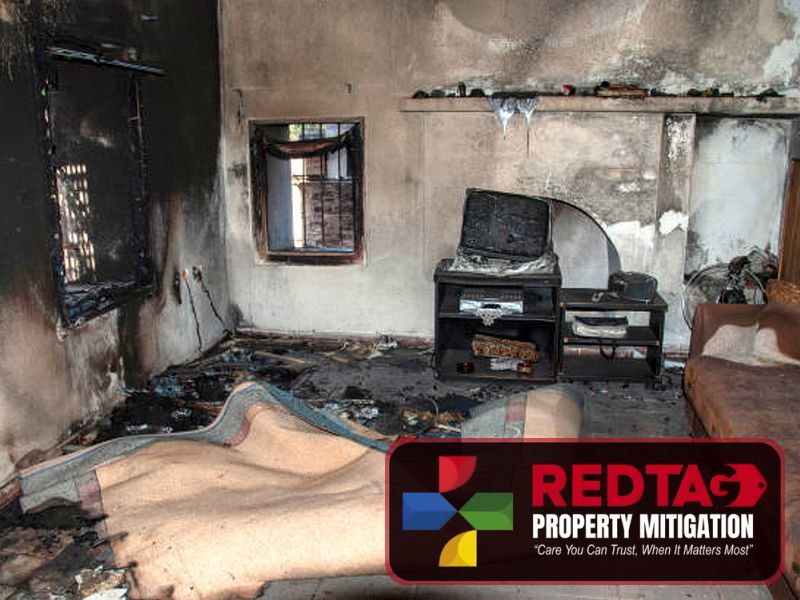
Once the scope is confirmed, the first active phase is containment and stabilization. For water damage this means stopping any ongoing water intrusion, placing initial extraction equipment, and establishing drying zones. For fire damage this meansemergency board-up and weather protection to secure the structure. For mold this means establishingcontainment barriers and negative air pressure before any affected material is disturbed. For biohazard situations this meansestablishing the containment perimeter and applying full protective measures before any removal work begins. Containment and stabilization limits the spread of damage and creates the controlled conditions the active mitigation work requires.
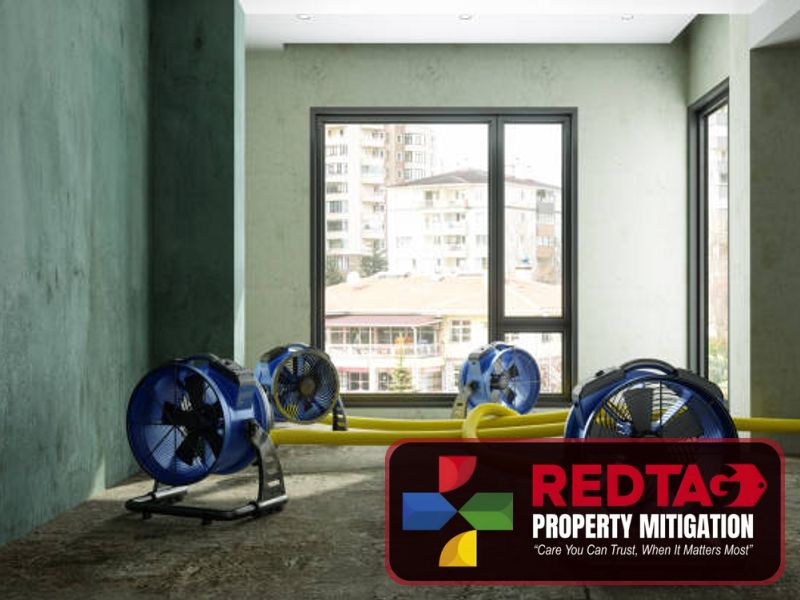
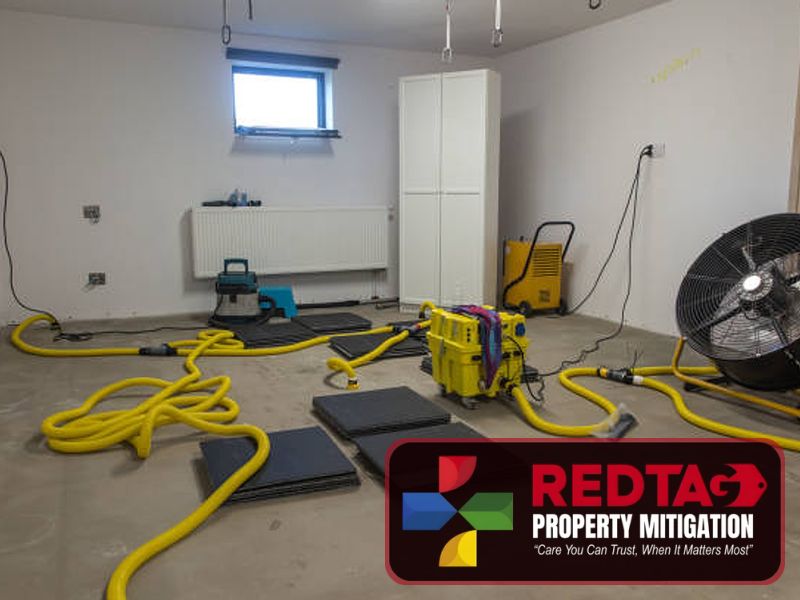
Active mitigation is the main phase of the project where the technical work is performed. Forwater damage this is structural drying with commercial-grade drying equipment, daily moisture monitoring, and drying log maintenance. Forfire and smoke this is charred material removal, surface cleaning, and odor control. Formold this is HEPA air scrubbing, affected material removal, and clearance preparation. Forstorm damage this is debris removal, temporary shoring, and loss prevention. Forcontents situations, pack-out and digital inventory run alongside the structural mitigation work. Documentation is maintained throughout every active mitigation phase.
When active mitigation is complete, the affected area is assessed to confirm it meets the required standard before the project is closed. For water damage this is drying verification confirming target moisture values have been reached. For mold this is post-remediation clearance preparation. For biohazard this isdecontamination verification. Once the standard is confirmed, the property owner is notified that the area is ready for re-occupancy or reconstruction. The complete documentation package is provided to the property owner and made available to the insurance carrier and adjuster. Forinsurance and adjuster clients the package is formatted for direct claim submission.
Contact RedTag Property Mitigation at888-RED-1-TAG to discuss how this process applies to a specific property situation in Modesto. The steps relevant to the specific damage type and property can be walked through before the first visit.
The five steps below describe what happens from the moment a mitigation situation is reported through to project close. Each step applies on every project regardless of the service type or property size.
The five steps are the same on every project. What changes by property type is the coordination structure, the communication chain, and how the documentation is organized and delivered at each phase.
For residential properties the property owner is the primary point of contact throughout the project. The assessment is explained directly to the owner, the scope is confirmed with them, and updates are provided directly throughout the active work phases. Documentation is formatted to support the residential insurance claim. For owner-occupied properties the owner is typically present during the initial assessment and available by phone throughout the active phases.
Forcommercial and large loss properties the assessment covers all affected areas simultaneously to establish the full multi-area scope before work begins. Equipment is deployed across all affected zones concurrently. Tenant and occupant communication is managed as part of the project. Documentation covers each affected area separately so records for each zone can be reviewed independently. Regular updates go to the building owner or manager throughout the active work phases.
Forproperty management clients, the property manager is the primary point of contact rather than the property owner or tenant. All project updates go to the manager first. The scope is confirmed with the manager before active work begins. Documentation is formatted to support both the property manager’s owner reporting obligations and the insurance carrier’s claim review. Access to the affected unit or area is arranged through the manager.
For projects where aninsurance carrier or adjuster is the primary coordinating party, documentation is produced in adjuster-ready format from the first day of the project. Daily drying logs, Xactimate-compatible scope records, and organized photo documentation are maintained throughout. The adjuster can request access to project records at any stage without waiting for project close. The documentation package at close is formatted for direct claim submission.
The five-step process runs the same way outside business hours as during them. Emergency dispatch is available at all hours. Call888-RED-1-TAG at any time for a water loss, post-fire situation, storm damage, or biohazard emergency in Modesto. The assessment begins as soon as possible after notification and containment and stabilization start on the same visit where the situation allows.

Contact RedTag Property Mitigation at888-RED-1-TAG to discuss how the process applies to a specific property type or client situation in Modesto. The coordination structure and documentation approach for the specific situation can be confirmed before the first visit.
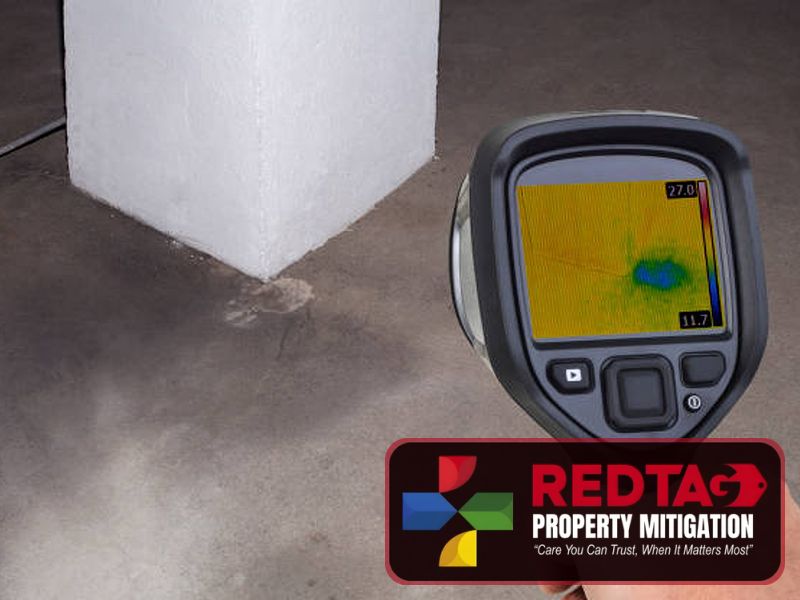
Assessment identifies all affected structural assemblies and materials using moisture meters and thermal imaging. Containment isolates the drying zone. Active mitigation involvesextraction, structural drying, daily moisture monitoring, and drying log maintenance. Project close is a drying verification confirming target moisture values have been reached across all monitored points. The full documentation set includes moisture mapping records, daily logs, equipment records, and photo documentation.
Assessment maps direct fire damage and secondary smoke and soot exposure throughout the building. Containment involvesemergency board-up and weather protection to secure the structure. Active mitigation involves charred material removal, smoke and soot cleaning, odor control, and pre-reconstruction preparation. Project close confirms all affected areas are cleared and ready for reconstruction. Photo documentation covers each cleaning phase.
Assessment identifies the mold type, location, extent, and moisture source. Containment establishesbarriers, negative air pressure, and HEPA filtration before any affected material is disturbed. Active mitigation involves affected material removal and ongoing air scrubbing. Project close is a post-remediation clearance preparation assessment. Documentation follows IICRC S520 and covers containment, removal scope, and clearance outcome.
Assessment identifies all storm-related structural damage. Containment involvesemergency tarping, board-up, and temporary shoring to protect the structure from further weather exposure. Active mitigation involves debris removal and loss prevention measures. Project close confirms all protective measures are in place and the structure is stabilized. Documentation covers the protective scope and materials used.
Forcontents situations, the assessment determines the pack-out scope, documentation runs concurrently with pack-out, and project close is the verified return of items to the restored property. Forbiohazard situations, containment is established before any removal work begins, active work involves removal and disinfection in sequence, and project close is decontamination verification supported by the full compliance documentation package including the disposal manifest.
The active mitigation content of each phase varies by service type. The overview below describes what the assessment, containment, active work, and close phases involve for each of the six service categories.
Contact RedTag Property Mitigation at888-RED-1-TAG to discuss what the assessment, active work, and project close phases involve for a specific damage type at a Modesto property.
Documentation is produced at each step of the process, not assembled at the end. Records created during the project are more accurate and more useful to insurance carriers, adjusters, and property owners than records produced after work is complete. The documentation approach is consistent across every project type and property size.
The site assessment produces a written scope record on the day of the first visit. This record identifies the affected areas, the damage type and cause, the conditions observed, and the mitigation approach determined. It is the first entry in the project file and the baseline against which all subsequent documentation is measured. Assessment records created on day one are more credible to adjusters reviewing the claim than scopes submitted weeks after work began.
Water damage projects produce a drying log entry every day of the active drying period. Each entry records moisture readings for all monitored points, equipment in operation, ambient conditions, and drying progress. Fire, mold, and biohazard projects produce phase records as each stage of the work is completed. Daily and phase records allow the adjuster to follow the project timeline and assess the reasonableness of the work performed at each stage.
Photos are taken before work begins to record pre-mitigation conditions, during active phases to document scope being performed, and at completion to record the finished state of each affected area. Photos are organized by area and phase. For multi-area projects each zone is documented separately. Photo documentation taken at each phase is more useful in a claim or dispute context than a single set of completion photos taken after all work is done.
The same underlying records are formatted differently depending on who the primary client is. Forinsurance and adjuster clients, records are organized for direct claim review with Xactimate-compatible scope lines and adjuster-standard drying log format. Forproperty management clients, the package supports owner reporting and insurance submission. For residential clients, the package supports the homeowner’s claim submission. The format changes. The content and completeness do not.
At project close the full documentation package is provided to the property owner. The package covers the complete project from assessment through completion. It is available to the insurance carrier, adjuster, and any regulatory authority with jurisdiction over the situation. For biohazard projects the package includes the disposal manifest and decontamination verification. For mold projects it includes the clearance preparation record. The package is the permanent record of the work performed. License and certification details that underpin the standard applied are on theStandards and Certifications page.
Documentation produced at each step of the process rather than assembled afterward is what allows the insurance claim, the owner reporting, and any regulatory review to proceed on the basis of an accurate, contemporaneous project record. Contact RedTag Property Mitigation to discuss documentation for a specific project type in Modesto.
RedTag Property Mitigation follows this process for every project throughout Modesto from coordinates 37.6391 N, 120.9969 W in California. The five-step process applies consistently across the Central Valley service area for all commercial and residential property types and all six mitigation service categories.
The full five-step process is applied to every project in Central Modesto covering Downtown Modesto, Sylvan, Beyer Park, the College Area, Lakewood, Creekwood, Village One, and the Airport District. All six service categories are available throughout the central zone for commercial and residential properties.
Sub-areas covered: Downtown Modesto, Sylvan, Beyer Park, College Area, Lakewood, Creekwood, Village One, Airport District.
Coverage extends north into Salida, Riverdale Park, Ceres, Turlock, Denair, Keyes, and Hughson. The same process and documentation standard applied in Central Modesto is applied to every project in this zone along the Highway 99 corridor through Stanislaus County.
Sub-areas covered: Salida, Riverdale Park, Ceres, Turlock, Denair, Keyes, Hughson.
Stockton and Tracy are covered as secondary service cities. Coverage includes North Stockton, Lincoln Village, Sherwood Manor, Mountain House, Lathrop, and Manteca. The five-step process applies to all mitigation projects in this zone for commercial and residential properties.
Sub-areas covered: North Stockton, Lincoln Village, Sherwood Manor, Mountain House, Lathrop, Manteca.
Coverage extends along the Highway 99 corridor into Merced, Atwater, Livingston, Madera, Clovis, and Fresno. Property owners and managers in these communities receive the same process and documentation standard as Central Modesto projects throughout the Central Valley service area.
Sub-areas covered: Merced, Atwater, Livingston, Madera, Clovis, Fresno.
Select Bay Area locations including Hayward, Livermore, and Pleasanton are covered for commercial mitigation situations. Patterson, Newman, and Los Banos in the broader Central Valley are also served within the wider service region.
Sub-areas covered: Hayward, Livermore, Pleasanton, Patterson, Newman, Los Banos.
Contact RedTag Property Mitigation to confirm service availability and discuss how the process applies to a specific property situation in Modesto. The assessment, active work, and documentation steps for the specific damage type and property can be described before the first visit.
These questions address the most common points raised by property owners, property managers, and insurance professionals about the mitigation process in Modesto and the Central Valley.
For residential properties the property owner or a designated representative should be present at the initial assessment to confirm access to all affected areas and to receive the scope confirmation at the end of the visit. For managed commercial properties the property manager or building contact can fulfill this role. For emergency situations where the owner cannot be present, the assessment can proceed and the scope is confirmed by phone or remotely once the assessment is complete.
The scope is confirmed with the property owner or manager after the assessment. Once confirmed, equipment deployment and crew scheduling are arranged. For emergency situations involving active water intrusion, ongoing structural exposure to weather, or biohazard conditions, containment and stabilization begin on the same visit as the assessment where the situation allows. For non-emergency situations, active work is scheduled promptly after scope confirmation.
Duration varies by service type and loss extent.Structural drying for a contained water loss typically takes three to five days. Larger water losses or losses with secondary mold risk take longer.Fire and smoke cleaning for a single room may take one to two days. Larger fire losses with extensive soot spread take longer.Mold remediation timelines depend on the extent and type of growth. An estimated timeline is provided at the scope confirmation stage.
In many cases yes, depending on which areas are affected and which are not. The assessment identifies areas that are safe to occupy during mitigation and communicates that clearly to the property owner or manager. Areas that cannot be safely used during active work are identified early so appropriate arrangements can be made. Drying equipment in residential properties can typically be operated with the occupant present unless the affected area is in a primary living space.
The property is ready for reconstruction when the active mitigation phase is complete and the project close assessment confirms the required standard has been met. For water damage this is drying verification. For mold this is clearance preparation. For fire this is pre-reconstruction debris and material clearance. The reconstruction transition is confirmed in writing in the project close documentation so the property owner has a clear record of when the mitigation phase ended and reconstruction could begin.
If the active mitigation phase reveals additional damage not identified during the initial assessment, the scope is updated and the change is discussed with the property owner or manager before additional work proceeds. Scope changes are documented in the project file. The original assessment record and the updated scope record together provide the complete picture of how the project scope developed from the initial assessment through completion.
Background on RedTag Property Mitigation including the service area, client types, license and certification details, and division information is on theAbout Us page. Details on the IICRC standards applied to each service type and the CSLB license that authorizes the work in California are on theStandards and Certifications page. Both pages can be reviewed before making a decision to call.
Contact RedTag Property Mitigation for additional questions about how the mitigation process works for a specific damage type or property situation in Modesto and the Central Valley.
RedTag Property Mitigation follows a consistent five-step process for every mitigation project in Modesto and the Central Valley. Call888-RED-1-TAG to start the process for a water damage, fire, mold, storm, contents, or biohazard situation at a commercial or residential property.
Contact RedTag Property Mitigation for information about how the mitigation process works in Modesto. Questions about any step in the process, what to expect at the assessment, how documentation is produced, and how the project is closed can all be answered before the first visit.
Quick Find: All Services
Emergency Water Extraction · Structural Drying · Moisture Mapping & Thermal Imaging · Flood Cuts & Drywall Removal · Antimicrobial Treatment · Water Damage Insurance Documentation · Emergency Board Up · Fire Damaged Material Removal · Smoke & Soot Cleaning · Odor Control & Thermal Fogging · Structural Stabilization · Pre Reconstruction Preparation · Mold Containment Barriers · Negative Air Pressure Systems · HEPA Air Scrubbing · Mold Affected Material Removal · Post Remediation Clearance · Emergency Roof Tarping · Storm Board Up · Temporary Shoring · Emergency Debris Removal · Property Loss Prevention · Contents Pack Out · Digital Inventory & Documentation · Secure Contents Storage · Biohazard Containment · Trauma Scene Disinfection · Biohazard Documentation · Storm Debris Removal · Fire Debris Removal · Construction Debris Removal · Renovation Debris Removal · Residential Junk Removal · Emergency 24/7 Junk Removal · Commercial Junk Removal · Property Management Junk Removal · Post Mitigation Debris Hauling · Outdoor & Yard Debris Removal