On April 1, 2026, the California Department of Water Resources published findings from its annual Sierra Nevada snow survey. The survey, conducted at Phillips Station, recorded no measurable snow for the date, making it the second lowest April reading on record. For commercial property owners considering building drying Modesto CA professionals provide after a water event, this is useful seasonal context. According to the DWR April 2026 report, the statewide snowpack reached just 18% of average, following a record hot March that accelerated snowmelt several weeks ahead of schedule across the Sierra Nevada. The Tuolumne River, which flows directly through Modesto, is fed by Sierra Nevada snowmelt and reservoir releases managed by the Turlock Irrigation District from Don Pedro Dam.
For commercial property owners and managers in Modesto, this is useful seasonal context. Spring is the period when water-related property losses across the Central Valley are historically most common, whether from river-adjacent flooding, storm drain backup, ground saturation affecting slab-level commercial buildings, or the increased load on aging plumbing systems that rain events bring. The City of Modesto’s storm information page confirms that both the Tuolumne River and Dry Creek are active flood factors for the city, and that storm drain conditions can change quickly in low-lying commercial areas.
If water has entered your commercial building, the extraction is only the beginning. What happens in the hours and days after the water is removed determines whether the building recovers cleanly or whether a manageable water event becomes a prolonged structural problem. Building drying Modesto commercial property owners need after a water intrusion is not a passive process. It is an active, monitored, documented mitigation service that directly affects the insurance claim, the mold risk, and the timeline to re-occupancy.
Why Drying a Commercial Building Is Not the Same as Letting It Dry Out
The instinct after water enters a building is often to open windows, run fans, and wait. For a commercial structure, that approach consistently produces worse outcomes than professional mitigation. Building drying Modesto professionals apply is fundamentally different from ambient air drying in three critical ways: equipment capacity, moisture mapping, and documentation.
Commercial air movers and industrial dehumidifiers operate at a scale that consumer equipment and open windows cannot match. A commercial air mover moves significantly more air volume across wet surfaces than a household fan, accelerating evaporation at the structural material level rather than just at the surface. Industrial dehumidifiers remove the moisture that evaporation generates from the air before it can resettle on other surfaces or be absorbed into building materials in adjacent areas. Without this combination working together in a coordinated deployment, moisture migrates further into the building rather than being driven out of it.
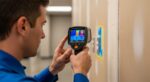
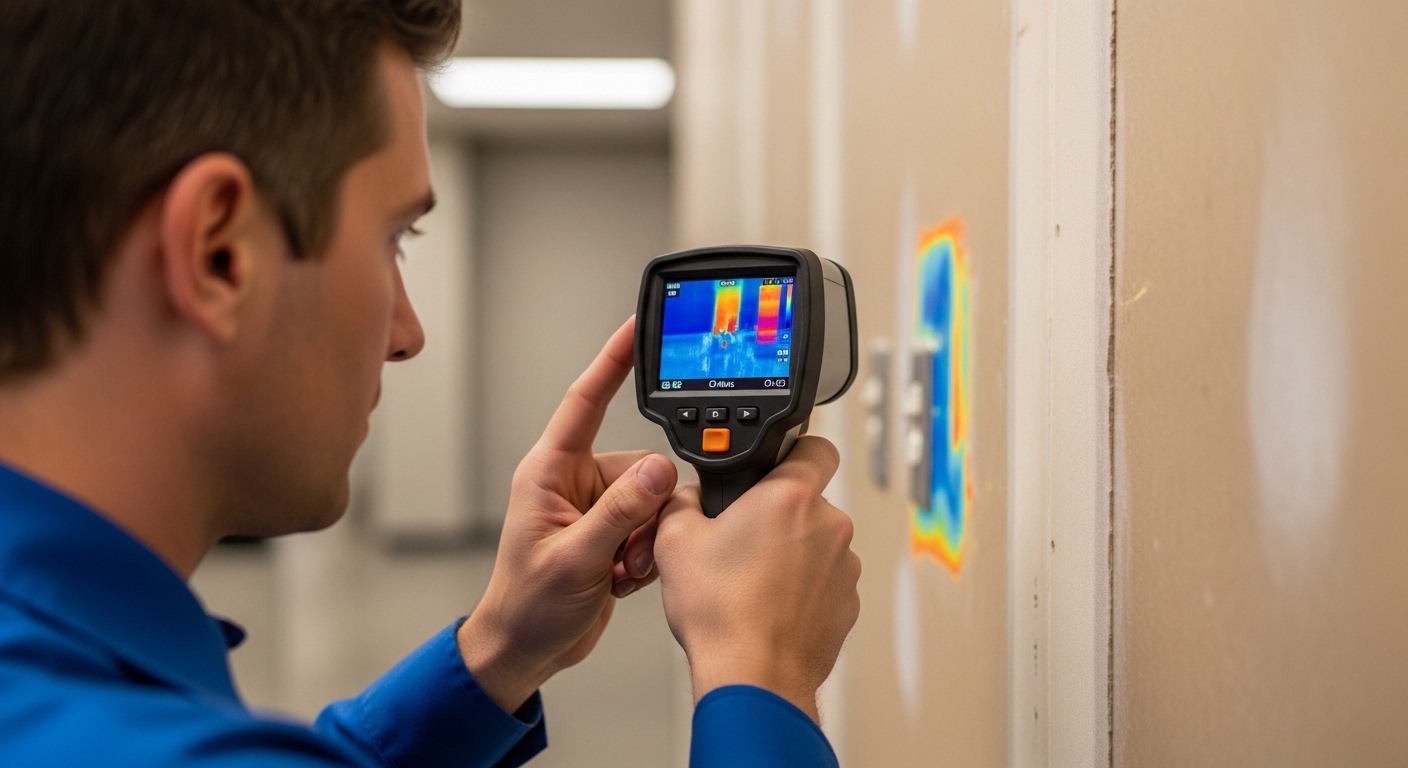
Moisture moves through wall cavities, under flooring assemblies, into subfloor systems, and through building penetrations that are not visible during a visual inspection. A commercial building that appears surface-dry within 24 hours may still have significant moisture in concealed structural assemblies that will produce mold within the 24 to 48 hour window established by IICRC S500 water damage restoration standards. Building drying Modesto mitigation teams address this through thermal imaging and moisture meter readings at every affected location before, during, and after the drying process.
Documentation is the third difference. A property owner running fans produces no record of drying progress, moisture levels, or equipment deployment. A professional building drying Modesto contractor produces daily moisture logs, equipment placement records, and drying progress reports that form the core of the insurance claim package. Without that documentation, the claim is difficult to process efficiently and the insurer has no verified evidence of the mitigation work performed.
What Commercial Structural Drying Involves
Commercial structural drying begins immediately after emergency water extraction is complete and moisture mapping has identified all affected zones throughout the building. It is a sequenced, monitored process with specific daily requirements.
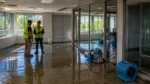
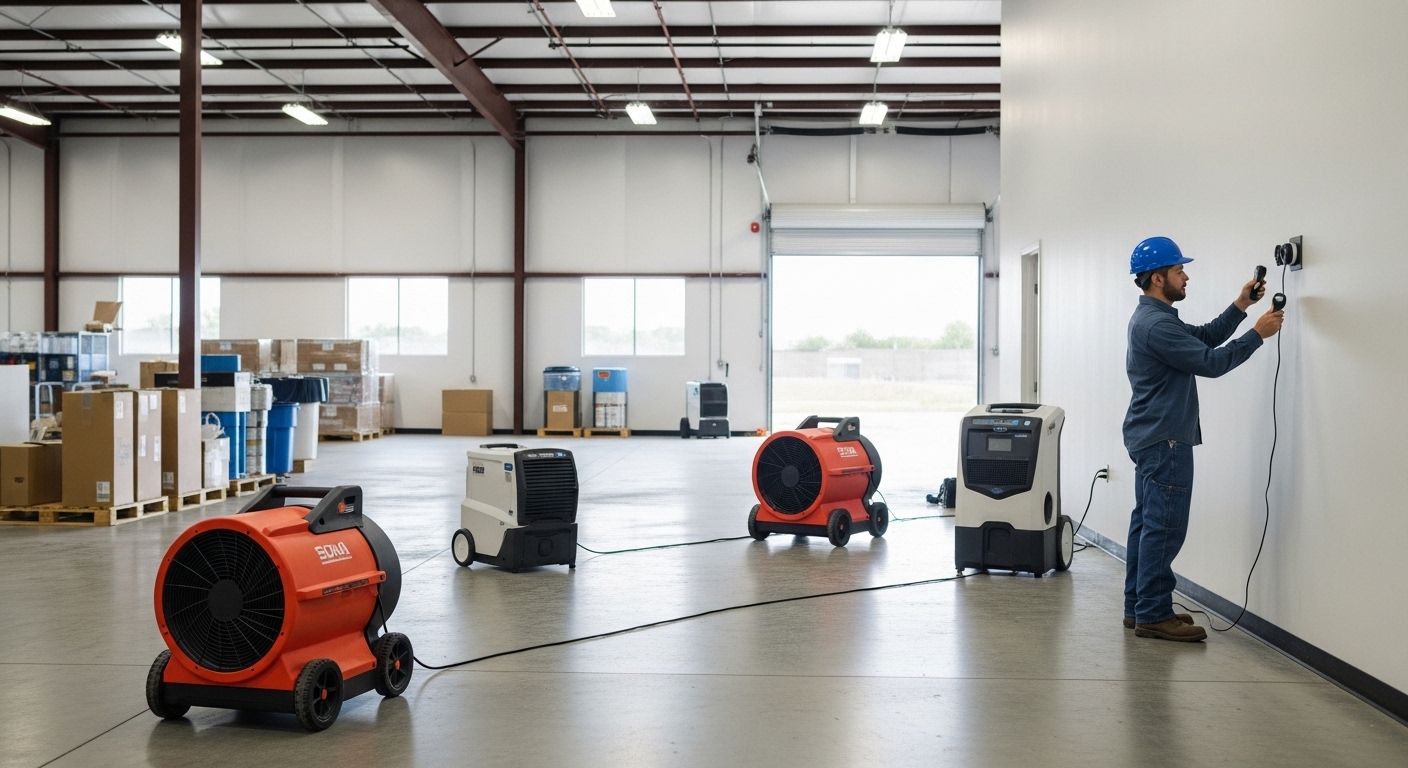
Commercial air mover deployment positions high-velocity air movers at calculated intervals across affected floor areas, wall surfaces, and structural assemblies. The placement is based on the moisture mapping findings rather than visual assessment alone. Wall cavity drying uses directed air movement into wall assemblies where moisture has migrated behind drywall or into insulation. Subfloor drying systems address moisture beneath flooring substrates where water has traveled under slab or into raised floor assemblies.
Industrial dehumidifier placement works in tandem with the air movers, removing the moisture driven into the air by evaporation before it can resettle. In a commercial building with a large internal volume, the dehumidifier capacity must be matched to the building size and the moisture load. Under-capacity dehumidification is one of the most common reasons building drying Modesto projects extend beyond their expected timeline.
Drying chamber setup may be required for portions of the building where containment of the drying environment produces more efficient moisture removal. This approach is particularly relevant in commercial spaces with high ceilings, large open areas, or significant air exchange with adjacent zones that have not been affected.
Daily moisture log recording is the documentation backbone of the entire process. At each mapped moisture location, readings are recorded every day and compared against the previous day’s readings to confirm drying progress. This daily log demonstrates to the insurance adjuster that the building dried within the required parameters and that equipment was deployed and operating correctly throughout. Building drying Modesto documentation produced by RedTag uses the format aligned with Xactimate scope requirements, which most commercial insurance carriers use for claim review.
The Mold Window and Why It Cannot Be Ignored
The most important number in any commercial water event is 48. That is the number of hours within which mold can begin establishing itself on wet building materials under standard indoor conditions. In Modesto’s Central Valley climate during spring and summer, warm ambient temperatures and moderate humidity can shorten that window.
This is not presented as a cause for alarm. It is simply the practical constraint that drives the building drying Modesto timeline. A water event that receives a professional drying response within the first few hours, with correct equipment deployment and daily moisture monitoring, moves through the drying phase within the window before mold can establish. A water event where drying is delayed, under-resourced, or incorrectly sequenced creates conditions where secondary mold remediation becomes a separate scope on top of the original water damage.
The Stanislaus County Office of Emergency Services notes that flood effects can be very local, impacting a single neighbourhood or building rather than a wider area. A commercial property that experiences water intrusion from a localised event, a storm drain backup or a plumbing failure under increased load during a rain event, faces the same mold timeline as a property affected by a larger flood. The size of the water event does not change the biological clock once moisture is in contact with structural materials.
Insurance Documentation and the Drying Record
For commercial property owners in Modesto and across the Central Valley service area, the insurance documentation produced during the building drying Modesto process is as important as the drying itself. Insurance carriers and adjusters reviewing a commercial water damage claim need specific information to approve the scope and process the payment efficiently.
The Stanislaus County floodplain management guidance confirms that standard commercial property insurance does not cover flooding and that a separate flood insurance policy is required for buildings in flood-risk zones. For non-flood water events covered under a standard commercial policy, the documentation package that supports the claim includes photo logs of all affected areas taken before drying begins, moisture readings at each mapped location recorded daily throughout the drying period, equipment placement records showing exactly what was deployed and where, and a final drying verification report confirming that all structural materials have returned to acceptable moisture content levels.
RedTag is IICRC certified to S500 Water Damage standards and produces complete claim documentation as a standard component of every building drying Modesto project. The documentation package is produced in Xactimate format, which aligns with the requirements of the majority of commercial insurance carriers and their adjusters.
What Commercial Property Owners in Modesto Should Know Before the Next Rain Event
Spring preparedness for commercial property owners in Modesto does not require significant investment. It requires a clear plan and a few practical checks before conditions change.
Know your building’s drainage points. Identify where water would enter the building first if storm drains backed up or if ground saturation increased. Low-lying entry points, below-grade storage areas, and slab-level commercial units adjacent to paved surfaces are the most common first points of water intrusion in a rain event.
Review your insurance policy. Confirm what categories of water damage are covered, understand the documentation requirements your carrier expects after a water event, and verify whether your property requires a separate flood policy given its flood zone status.
Identify a licensed, IICRC-certified building drying Modesto contractor in advance. Having the contact saved before a water event means the response begins within minutes of identifying the problem, not after a search for available contractors during an active loss situation.
RedTag Property Mitigation provides building drying Modesto commercial properties can access 24 hours a day, 7 days a week. Visit the contact page to request emergency dispatch or a pre-season site assessment.
structural drying after flood Modesto
Frequently Asked Questions
Why is professional structural drying necessary after water enters a commercial building?
Professional building drying Modesto contractors provide is necessary because water migrates into concealed structural assemblies that visual inspection and consumer equipment cannot address. Wall cavities, subfloor systems, and insulation absorb and retain moisture that surface-level drying does not reach. Without commercial air movers, industrial dehumidifiers, and daily moisture monitoring, these concealed wet areas remain in place and produce mold growth within 24 to 48 hours under the IICRC S500 standard. Professional structural drying also produces the documented moisture logs and equipment records that commercial insurance carriers require to process a water damage claim.
How long does commercial structural drying take in Modesto?
The timeline for building drying Modesto projects depends on the volume of water involved, the size of the affected area, the types of structural materials affected, and how quickly the drying response began after the water event. A well-resourced professional response that begins within the first few hours of a water event typically achieves full structural drying within three to five days for a moderate commercial loss. Delayed responses, under-capacity equipment, or significant moisture in concealed assemblies extend that timeline. Daily moisture log readings confirm when materials have reached acceptable levels and allow the drying phase to close with documented verification rather than estimation.
What equipment is used for commercial structural drying?
Commercial building drying Modesto requires equipment operating at a scale significantly beyond consumer availability. Commercial air movers generate high-velocity airflow across wet surfaces to accelerate evaporation at the structural material level. Industrial dehumidifiers remove the moisture driven into the air by that evaporation before it can resettle on adjacent building materials. Wall cavity drying systems direct airflow into concealed wall assemblies where surface equipment cannot reach. Drying chambers may be established in large commercial spaces to contain and concentrate the drying environment for more efficient moisture removal. All equipment placement is based on moisture mapping findings rather than visual assessment.
Does structural drying affect the mold risk after a water event?
Yes, directly. Building drying Modesto conducted correctly within the first 24 hours of a water event is the primary mechanism for preventing secondary mold development. The IICRC S500 standard establishes that mold can begin on wet structural materials within 24 to 48 hours. A professional drying response that removes moisture from all affected structural assemblies within that window prevents the conditions mold requires from developing. A delayed or incomplete drying response leaves residual moisture in concealed areas where mold can establish and spread, adding a separate mold remediation scope to what began as a manageable water loss.
What documentation does a commercial water damage insurance claim require?
A commercial water damage insurance claim requires photo documentation of all affected areas before drying begins, daily moisture reading logs at each mapped location throughout the drying period, equipment placement records confirming what was deployed and for how long, a final drying verification report confirming materials have returned to acceptable moisture content, and a scope of work in Xactimate format. Building drying Modesto IICRC-certified contractors produce this documentation as a standard component of every project. Incomplete or absent documentation is among the most common causes of insurance claim delays following a commercial water event, which is why engaging a licensed contractor from the first hour of the loss is important.
Conclusion
When water enters a commercial building in Modesto, the extraction is only the first step. Building drying Modesto commercial property owners depend on is the process that determines whether the structure recovers cleanly or whether a contained water event develops into a larger structural and biological problem. The California DWR’s April 1, 2026 snow survey findings are a timely reminder that spring water management conditions across the Tuolumne River watershed are worth being aware of. A professional drying response, with the right equipment, daily monitoring, and complete insurance documentation, is what separates a water event that resolves in days from one that extends for weeks.
More Services
For more information about commercial water mitigation and related services at RedTag Property Mitigation, check them out below:
- Commercial Water Mitigation & Structural Drying
- Commercial Fire, Smoke & Soot Mitigation
- Mold Mitigation Support
- Storm & Emergency Mitigation
- Contents & Asset Protection
- Biohazard & Trauma Scene Cleaning
External Sources Used (for reference only):
- https://water.ca.gov/News/News-Releases/2026/Apr-2026/Record-Hot-Dry-March-Wipes-Out-California-Snowpack-Leaving-No-Measurable-Snow-for-April-Survey — California DWR — April 1, 2026
- https://www.modestogov.com/1106/Storm-Related-Information — City of Modesto Storm Information — current
- https://www.stancounty.com/planning/bp/floodplain-management.shtm — Stanislaus County FEMA Flood Maps — current
- https://oes.stancounty.gov/stanemergency/emergencies-disasters/floods — Stanislaus County OES Floods — current
- https://iicrc.org/current-standards-field-guides-test/ — IICRC Standards — current